
Maryland Leasing Fees: What Landlords Should Compare in 2026
What if the lowest leasing quote leaves you unsure who handles tenant screening, lease paperwork, or questions after move-in? Comparing a leasing fee for rental property maryland can be difficult when providers use different fee structures and define placement services differently. When a property is vacant, it can be tempting to focus on speed before checking exactly what the fee covers.
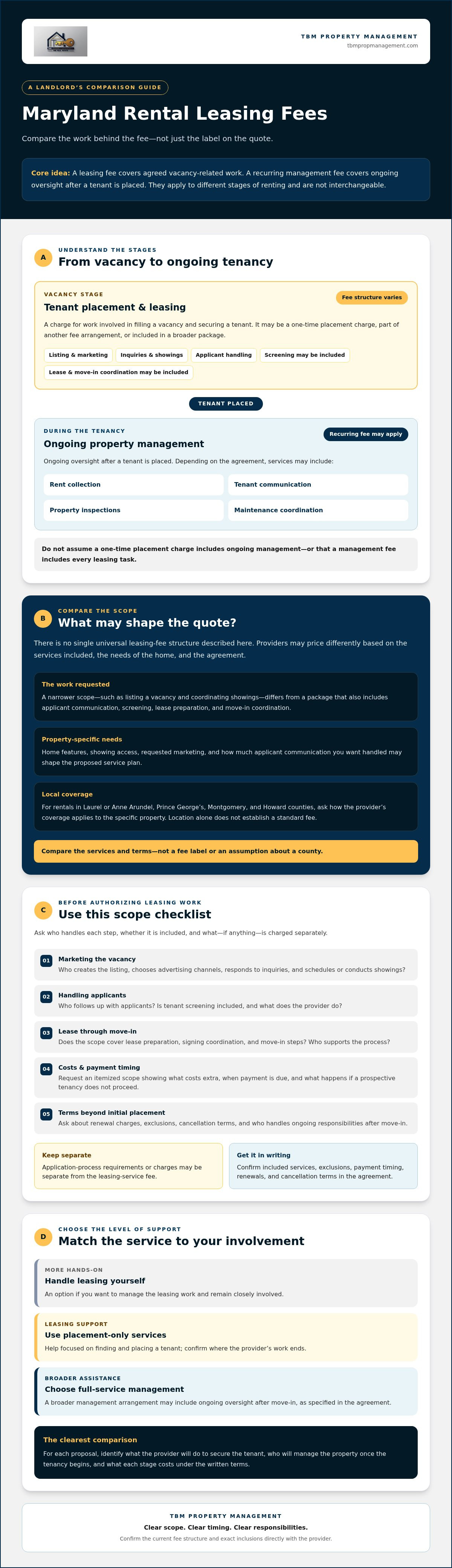
Look beyond the headline charge. Tenant placement and leasing are distinct from ongoing property management, and a single fee may not include every service you need. This guide explains common fee structures and what to confirm about services, payment timing, renewals, and responsibilities in writing. It also shows how to compare providers based on the support your property needs, whether you want help finding a tenant or broader assistance after move-in. Clear terms make it easier to compare proposals and avoid surprises during a vacancy.
Key Takeaways
- A leasing fee for rental property maryland may cover different tasks depending on the provider, so compare the written service scope, not just the fee structure.
- Separate one-time tenant placement or leasing charges from recurring property management fees to understand what you’ll pay at each stage.
- Check when payment is due and what happens if a prospective tenancy doesn’t proceed before authorizing leasing work.
- Ask providers to put included services, exclusions, renewal charges, and cancellation terms in writing.
- Choose support that fits your time and desired involvement, from handling leasing yourself to using placement-only or full-service management.
What Is a Leasing Fee for a Maryland Rental Property?
A leasing fee is a charge for work involved in filling a vacancy and securing a tenant. Its structure and scope depend on the provider and written agreement, so the label alone doesn’t tell you what’s included. A leasing fee for rental property maryland may be a one-time tenant-placement charge, part of another fee arrangement, or included in a broader service package.
In brief: A leasing fee covers agreed vacancy-related services, while a recurring management fee covers ongoing property oversight after a tenant is placed. These charges apply to different stages of renting and shouldn’t be treated as interchangeable.
What services can a leasing fee cover?
Leasing work may include preparing a listing, marketing the vacancy, responding to inquiries, and arranging showings. Tenant screening and application handling may also be part of the placement process, but confirm whether they’re included and what the provider will do. Ask whether the written scope covers lease preparation, signing coordination, and move-in steps. Similar fee labels can describe different service packages, so compare the actual tasks rather than the name of the charge.
A lease sets out the terms of the tenancy between the parties. For a general overview of what a lease agreement is, see Wikipedia’s explanation. When comparing providers, focus on who prepares the lease and what support continues through signing and move-in.
How is a leasing fee different from a management fee?
Leasing is vacancy-related: it helps move a property from available to occupied. Property management involves ongoing oversight during the tenancy. Depending on the agreement, recurring management services may include rent collection and tenant communication, as well as property inspections or maintenance coordination. Don’t assume a one-time placement charge covers these ongoing tasks.
That distinction matters if you want help beyond finding a tenant. TBM Property Management offers tenant placement and leasing alongside full-service property management. Confirm the current fee structure and exact inclusions directly. For a broader look at ongoing support, read the full-service property management guide.
Before comparing proposals, separate the work into two questions: what will the provider do to secure the tenant, and who will handle the property once the tenancy begins? Clear answers make it easier to compare services and choose a level of support that fits your needs.
What Determines a Maryland Rental Property Leasing Fee?
There isn’t one universal structure for a leasing fee for rental property maryland. Providers may price the work differently depending on the services included, the needs of the home, and the agreement. A quote for listing a vacancy and coordinating showings may cover a narrower scope than one that also includes applicant communication, tenant screening, lease preparation, and move-in coordination.
Before comparing quotes, request an itemized scope that shows which leasing tasks the fee covers, what costs extra, and when payment is due. A clear breakdown lets you compare the work itself rather than relying on a fee label.
Which leasing tasks should landlords confirm?
Ask each provider who handles each stage of the vacancy. Does the service include creating the listing, choosing advertising channels, and responding to inquiries? Who schedules and conducts showings, and who follows up with applicants?
Then clarify whether tenant screening, lease preparation, signing coordination, and move-in steps are included or handled separately. If the provider uses an application process, review its requirements and charges separately from the leasing-service fee. The Maryland landlord-tenant law resource from the Attorney General offers information for landlords and tenants. Consult it when reviewing applicable rental requirements.
Do property location and rental needs affect the service scope?
Property-specific needs can affect the work involved, but that doesn’t mean a particular county has a standard leasing fee. A home’s features, access for showings, the marketing requested, and the amount of applicant communication you want the provider to handle may all shape the proposed scope. Ask how the service plan fits your property instead of assuming location alone determines the fee.
For landlords in Laurel or Anne Arundel, Prince George’s, Montgomery, and Howard counties, a provider’s local coverage can help clarify how leasing tasks will be handled for a particular rental. TBM Property Management provides tenant placement, leasing, and tenant screening. Confirm the current agreement for exact inclusions and charges. The tenant placement services guide explains more about the placement process.
Before authorizing work, ask for a property-specific explanation of services and charges. Reviewing the written scope with TBM Property Management can help you identify which leasing responsibilities you’d handle and which are included in the proposed service.
How to Compare Maryland Leasing Fee Structures and Total Service
A quote is easier to assess when you separate its pricing model from the work it covers. Providers may offer percentage-based, flat-fee, or bundled arrangements, but availability and terms vary. No structure is automatically cheaper or better. Compare the payment trigger, included tasks, and what happens if a prospective tenant doesn’t move forward.
| Structure | What may trigger payment | What to confirm | If the tenancy doesn’t proceed |
|---|---|---|---|
| Percentage-based | A contract-defined event, potentially tied to rent or a completed placement | What the percentage is calculated from and which leasing tasks it covers | Whether any charge is still due, and whether another placement attempt is included |
| Flat-fee | A milestone stated in the agreement, such as authorizing work or completing a placement | Whether advertising, showings, screening, and lease coordination are included | Whether the fee is refundable, partially due, or carried forward |
| Bundled | One or more contract-defined milestones for combined services | How placement charges relate to recurring management and what each covers | How charges are handled if placement stops before move-in or management begins |
These are comparison prompts, not universal contract terms. Ask for the exact terms in writing before work begins.
What should a landlord compare beyond the quoted fee?
Compare the deliverables and the working relationship. Who responds to inquiries, communicates with applicants, and explains the screening process? What updates or reports will you receive, and how involved are you expected to be? Check whether advertising, lease renewals, or other services are billed separately, and identify the event that triggers each charge.
Keep leasing charges distinct from ongoing management fees and other tenancy-related costs. Ask how the agreement treats advertising or renewal work, and review Maryland security deposit information separately from provider fees. This helps distinguish amounts for the provider’s services from costs related to the tenancy.
When might tenant placement or full-service management fit better?
Placement support may suit an owner who wants help securing a tenant but plans to manage the tenancy afterward. Full-service management may fit a landlord seeking continuing operational support, such as rent collection, maintenance coordination, and property inspections. Match the arrangement to your available time, desired involvement, and plans after move-in. For broader provider-selection criteria, see the professional property management guide.
If you’re comparing options in Maryland, ask TBM Property Management for a property-specific explanation of services and charges. A clear scope makes it easier to choose support that fits your needs.
What Maryland Landlords Should Check Before Signing a Leasing Agreement
A clear agreement can prevent confusion when a vacancy is urgent and leasing work is about to begin. Before you approve the leasing fee for rental property maryland, make sure the document explains what you’re authorizing, what the provider will do, and how charges apply if plans change.
Which fee terms should appear clearly in writing?
Use this checklist to review the agreement before signing:
- Fee amount or calculation: Confirm the charge or how it will be calculated, and whether separate costs may apply.
- Payment trigger: Identify the specific event that makes payment due, such as authorizing work or completing a placement.
- Included services: List the leasing tasks covered, such as marketing, showings, screening, or lease coordination.
- Exclusions and additional charges: Confirm which responsibilities remain yours and whether services such as renewal work or advertising are billed separately.
- Cancellation and unsuccessful placement: Clarify what happens if you end the agreement early or a prospective tenancy doesn’t proceed, including any fees or remaining obligations.
Get every charge and responsibility in writing before authorizing leasing work. If a proposal uses a broad term such as “tenant placement,” ask for a list of the specific tasks included so both sides have the same expectations.
What Maryland-specific details should landlords verify?
Requirements may depend on the property’s jurisdiction and the issue involved. Check current state and applicable county or municipal rules through authoritative sources, and consult qualified counsel if you need legal advice about your circumstances. A provider’s fee agreement is not a substitute for checking the requirements that apply to your rental.
For related topics to research, see the Maryland landlord-tenant rights guide. As you review an agreement, distinguish the provider’s service terms from your own responsibilities as a landlord.
For a clearer picture of the leasing support and charges for your property, discuss your rental property needs with TBM and ask for an explanation of the services and written terms before deciding.
Choosing Leasing Support for Your Maryland Rental Property
The right level of help depends on more than the leasing fee. Consider how much time you can give the property, which leasing tasks you’re comfortable handling, and whether you want to manage the tenancy after move-in. A narrower service scope may mean more hands-on work for you; broader support may suit an owner seeking help with ongoing operations.
Which landlord situation fits each level of support?
- Self-leasing: A possible fit if you have time to create and manage listings, respond to inquiries, arrange showings, screen applicants, and coordinate the lease. Advantage: You stay closely involved. Trade-off: You organize and manage each step.
- Placement-only support: May suit owners who want help finding and placing a tenant, then plan to manage the tenancy themselves. Advantage: You can delegate the agreed placement tasks. Trade-off: Confirm the handoff and be ready to handle responsibilities outside the placement scope.
- Full-service management: May fit owners who want ongoing support beyond leasing. Services can include rent collection, maintenance coordination, and property inspections, depending on the agreement. Advantage: You can delegate more operational work. Trade-off: Review the management scope and recurring charges separately from leasing costs.
There’s no universally best choice. Match the service to your property needs and preferred level of involvement, then compare the written terms rather than assuming a particular leasing fee for rental property maryland covers every stage.
What should you ask a local leasing provider?
Before choosing a provider, ask for a written fee schedule that lists included tasks, exclusions, separate charges, and payment timing. Find out how tenant screening is handled, who communicates with applicants, and what happens if a placement doesn’t proceed. If you choose placement-only support, ask how the tenancy is handed back to you. For ongoing management, clarify who handles rent collection and other continuing property needs.
Confirm that the provider serves your property’s location and ask which services are available there. TBM Property Management is based in Laurel and serves landlords in Anne Arundel, Prince George’s, Montgomery, and Howard counties. Its offerings include leasing, tenant placement, tenant screening, and full-service property management. Confirm the current fee structure and service details for your property before making a decision.
Have questions about the right level of support? Talk with TBM about leasing support for your Maryland rental and request a property-specific explanation of services and charges.
Choose Leasing Support With Clear Terms
The right leasing arrangement starts with a clear picture of the work involved. Compare the services behind each fee, distinguish tenant-placement charges from ongoing management, and confirm payment timing, exclusions, and cancellation terms in writing. That makes the leasing fee for rental property maryland easier to evaluate based on fit and scope, not just its label.
Consider how much time you want to spend managing the vacancy and what support you’ll need after a tenant moves in. Placement support may fit owners who plan to oversee the tenancy themselves, while full-service management is an option for landlords seeking ongoing operational help.
TBM Property Management is based in Laurel, brings more than 12 years of local real estate experience, and serves Anne Arundel, Prince George’s, Montgomery, and Howard counties. Ask for a property-specific explanation of available services and charges. Talk with TBM about leasing support for your Maryland rental and request clear written terms for your property.
Frequently Asked Questions
What is a leasing fee for a rental property in Maryland?
A leasing fee is a charge for agreed work to market a rental vacancy and secure a tenant. Depending on the provider’s written terms, it may cover tasks such as advertising, showings, applicant screening, or lease coordination. The phrase leasing fee for rental property maryland doesn’t describe one standard package. Check the specific services, exclusions, and payment trigger in the agreement before authorizing work.
How much is a leasing fee for a rental property in Maryland?
There isn’t one fixed amount that applies to every Maryland rental or provider. The charge can depend on the service scope, property needs, and fee structure, so request a property-specific quote rather than relying on a general figure. Ask whether the fee is separate from ongoing management charges, and confirm any advertising, renewal, or other potential costs in writing before comparing proposals.
What is usually included in a rental property leasing fee?
A leasing fee may cover some combination of preparing a listing, marketing the vacancy, responding to inquiries, arranging showings, and securing a tenant. Tenant screening, application handling, lease preparation, signing coordination, and move-in steps may be included or billed separately. Ask the provider to identify each task included in the quoted fee and explain what happens if an applicant doesn’t proceed or the tenancy falls through.
Is a leasing fee the same as a property management fee?
No. A leasing fee is associated with vacancy-related work and tenant placement, while a property management fee pays for agreed ongoing oversight. Ongoing services may include rent collection and tenant communication, with other responsibilities depending on the management agreement. A landlord could have both types of charges if they hire support to place a tenant and continue with management afterward. Review each fee and service scope separately.
Can a Maryland landlord charge a tenant a leasing fee?
Don’t assume a fee charged by a leasing provider can automatically be passed on to a tenant. The answer may depend on the type of charge, the lease terms, and current state or local requirements. Application fees are a separate issue from a landlord’s provider fee. Before charging a tenant, check current Maryland and applicable local guidance or consult qualified counsel to confirm what’s allowed and how the charge must be disclosed.
When is a leasing fee typically due?
The agreement should state exactly when the fee becomes payable. A provider may tie payment to a specified milestone, but there’s no single trigger to assume across contracts. Check whether payment is due when you authorize leasing work, when a tenant is approved, when a lease is signed, or at another point. Also clarify whether any amount is owed if the placement doesn’t proceed or you cancel the work.
Should I choose tenant placement or full-service property management?
Choose tenant placement if you want help securing a tenant and are prepared to manage the tenancy afterward. Full-service property management may suit you if you want continuing support, such as rent collection, maintenance coordination, and property inspections. Compare the time you can give the property, your preferred level of involvement, and what each agreement includes. Ask how leasing responsibilities end and ongoing management responsibilities begin.