
Renting Out a House in Prince George’s County, MD: A Landlord’s Guide
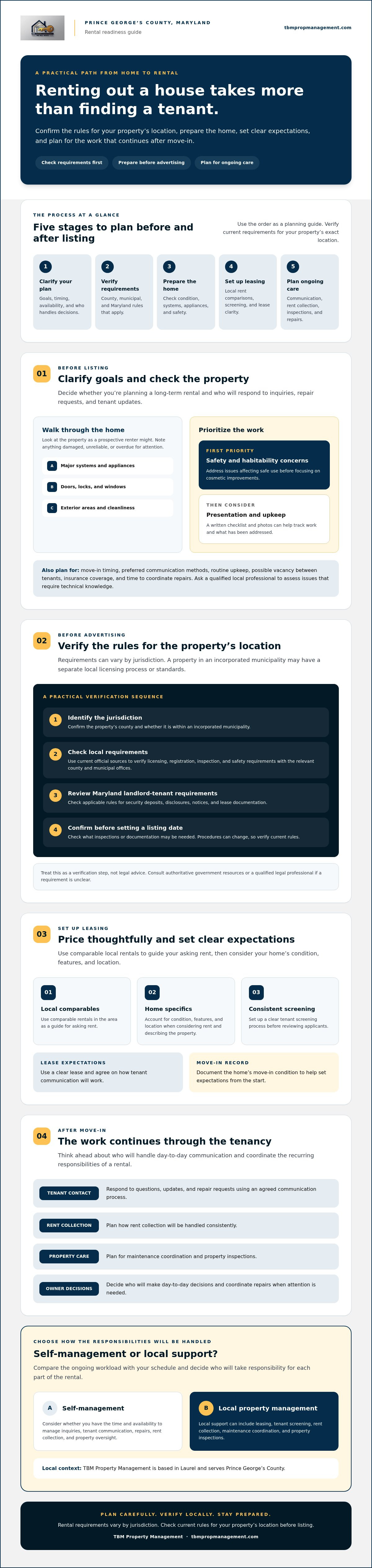
What if finding a tenant is only one step in getting your Prince George’s County rental ready? If you’re renting out a house in prince george's county md, you’ll also need to check which county or municipal requirements apply, prepare the home, and plan for the work that continues after move-in.
It’s understandable to want a reliable tenant without a long vacancy or a steady stream of maintenance and rent collection tasks. A clear process can help you make informed decisions and manage those responsibilities with less stress.
This guide covers the practical steps: confirming applicable rental requirements, preparing your property before advertising, setting up a consistent tenant screening process, and planning for inspections, maintenance, and rent collection. Requirements can vary by jurisdiction, so check the current rules for your property’s location before listing it. If you’d rather have local support beyond tenant placement, TBM Property Management is based in Laurel and serves Prince George’s County with leasing, tenant screening, rent collection, maintenance coordination, and property inspections.
Key Takeaways
- Before renting out a house in prince george's county md, clarify your rental goals and who will handle tenant needs and day-to-day decisions.
- Check current county and municipal licensing, registration, inspection, and safety requirements for your property’s specific location before advertising.
- Use comparable local rentals to guide your asking rent, then account for your home’s condition, features, and location.
- A clear lease, documented move-in condition, and agreed communication process can help set expectations from the start.
- Compare the ongoing tasks of self-management with local support for leasing, tenant screening, rent collection, inspections, and maintenance coordination.
Before Renting Out a House in Prince George’s County, Check Your Goals and Property
Is the home ready for a tenant, and do you have time to respond when something needs attention? Those are sensible questions, not signs that you’re unprepared. Renting out a house in Prince George’s County, MD involves more than finding a renter. You’ll also need a plan for the property, tenant communication, and decisions that come up during the tenancy.
First, clarify whether you’re planning a long-term rental and who will make day-to-day decisions. If you’ll be the main contact, consider how you’ll handle inquiries, repair requests, and updates when you’re away. The county includes a range of communities and local governments. The Prince George's County, Maryland overview can help orient you to the area, while your property’s specific location will guide the next steps.
Is your Prince George’s County home ready to rent?
Walk through the property as if you were seeing it for the first time. Check major systems and appliances, doors and locks, windows, exterior areas, and overall cleanliness. Note anything damaged, unreliable, or overdue for attention. A written checklist paired with photos can help you prioritize work and track what’s been addressed.
Separate potential safety or habitability concerns from cosmetic upgrades. A fresh coat of paint may improve presentation, but it shouldn’t take priority over a problem that affects safe use of the home. If an issue requires technical knowledge, ask a qualified local professional to assess it rather than guessing at the cause or repair. Confirm applicable safety and property requirements before advertising.
What should a landlord decide before listing?
Set your intended move-in timing, preferred communication methods, and expectations for handling tenant questions. Consider the home’s layout, condition, and location when deciding who it may suit. These decisions can shape your preparation and help you describe the rental accurately.
Then make a preliminary operating plan. Account for routine upkeep, possible vacancy between tenants, insurance coverage, and your availability to coordinate repairs. Review your insurance with your provider to understand whether your current coverage fits a rental. Be realistic about the time you can give to inquiries and ongoing tenant communication. If that workload doesn’t fit your schedule, consider whether support with leasing, rent collection, property inspections, and maintenance coordination would help. A clear plan can make the move from owner-occupied home to rental more manageable.
Verify Prince George’s County and Maryland Rental Requirements Before Listing
Before you advertise, confirm which rental rules apply to your specific property. Requirements can vary by location, and procedures may change. A home in an incorporated municipality may be subject to a separate local licensing process or standards, so don’t assume that checking county requirements alone is enough. For owners renting out a house in prince george's county md, checking first can help prevent avoidable delays once you’re ready to list.
Use current official sources to check county and municipal licensing, registration, inspection, and safety requirements. Then review Maryland landlord-tenant requirements separately. State rules may address matters such as security deposits, disclosures, notices, and lease documentation, while local rules may add requirements for properties in a particular jurisdiction. Treat this as a verification step, not legal advice. Consult authoritative government resources or a qualified legal professional if a requirement is unclear.
Which rental rules should Prince George’s County owners verify?
Start with the county’s official rental housing resources, then contact the municipality if the property is within an incorporated area. Check current requirements before setting a listing date, and confirm what inspections or documentation may be needed. For plain-language local context on leases, deposits, and other landlord-tenant topics, review the Maryland People’s Law Library’s Prince George's County rental and housing laws.
A practical pre-listing sequence is:
- Identify the property’s county and municipal jurisdiction.
- Verify current licensing, registration, inspection, and safety requirements with the relevant official offices.
- Check authoritative Maryland sources for applicable deposit, disclosure, notice, and lease requirements.
- Resolve questions with the appropriate agency or a qualified legal professional before advertising.
How can landlords document property condition and compliance?
Keep dated records of inspections, repair invoices, required notices, and relevant certificates in one organized file. Take clear, consistent photos of the home before a tenant takes possession, including existing wear or damage. These records can help you track completed work and establish a useful reference point if questions arise later.
For a broader overview, consult a reliable Maryland landlord-tenant rights guide and verify that its information is current and relevant to your property. If you’d like help coordinating rental requirements alongside leasing and ongoing property oversight, learn more about local property management support from TBM Property Management, which serves Prince George’s County. Confirm the company’s current availability and process for your specific jurisdiction.
Set Rent and Find a Tenant for Your Prince George’s County House
Pricing and tenant selection work best as a connected process. A realistic asking rent can support interest, while an accurate listing helps prospective tenants decide whether the home fits their needs. If you’re renting out a house in prince george's county md, use current local evidence rather than a countywide estimate or a single nearby listing.
How should you estimate rent for a Prince George’s County house?
Compare rentals that are genuinely similar to yours. Look at nearby homes with a similar size, layout, condition, amenities, and lease terms. A renovated home with included appliances may not be a useful comparison for a property that needs updates, even if they have similar bedroom counts. Location within the county matters, too, so weigh comparable properties in areas renters are likely to consider alongside yours.
Online asking rents are useful indicators, not proof of the amount a home will rent for or how quickly it will attract a tenant. Review current comparable listings and local market evidence, then describe your property accurately. If inquiries are limited or showing feedback points to a mismatch, reassess the rent, listing details, and competing options. Make changes based on what the market is showing, not assumptions.
What belongs in a careful tenant-selection process?
Write down your screening criteria and application steps before responding to applicants. Apply them consistently and make sure they comply with applicable fair housing requirements. Use the same process for each prospective tenant, evaluate relevant information using the same standards, and keep clear records of decisions. Consistency supports a fairer process and helps you explain how you reached a decision.
Verify application information in a uniform, responsible way. Tell applicants what information you’ll request, collect only what’s relevant to your stated criteria, and store sensitive information securely. Avoid making promises about an applicant based on an informal conversation or first impression. A documented process helps you focus on the same rental-related factors for everyone.
Clear advertising sets expectations before a showing. Include accurate details about the home’s features, condition, lease terms, and any relevant limitations. Avoid language that could suggest a preference for a particular type of tenant. Owners who want support with consistent screening and leasing can explore tenant placement services, while confirming that a provider’s process fits their property and applicable requirements.
Plan the Lease, Move-In, and Ongoing Care of Your Prince George’s County Rental
A signed lease is only the starting point. A clear move-in process and dependable routine for rent, communication, inspections, and repairs can help prevent confusion later. Before renting out a house in prince george's county md, verify current Maryland and local requirements that may affect lease terms, notices, property access, or other responsibilities. If a term is unclear, confirm it with an authoritative source or qualified professional rather than relying on an outdated template.
What should landlords organize before move-in?
Prepare the signed lease, a written record of the property’s condition, access arrangements, and a clear way for the tenant to contact you. Explain how to report routine maintenance concerns and what process to use for urgent issues. Set expectations for communication, property access, and recordkeeping in line with the lease and verified requirements. A shared understanding from the start makes it easier to handle requests calmly and consistently.
- Keep a copy of the signed lease and move-in condition documentation.
- Record the agreed method for rent payments and tenant communications.
- Explain how maintenance requests should be submitted and tracked.
How can owners keep rental operations manageable?
Choose a reliable way to track rent and keep dated records of tenant messages, repair requests, invoices, and follow-up. Schedule property checks in accordance with the lease and applicable requirements, and document observations consistently. When a repair is needed, record the concern, coordination steps, and completion. A simple system helps you spot recurring issues and keeps important details from getting lost in texts or email.
Build regular upkeep into your calendar, and decide who will coordinate repairs if you’re unavailable. For owners handling this themselves, clear records and a consistent response process can make the workload more predictable. If you’re considering full-service property management in Laurel, compare the scope of support with the tasks you want to delegate. TBM Property Management serves Prince George’s County and provides rent collection, property inspections, and maintenance coordination. You can ask about property management support and confirm current service availability for your property’s jurisdiction.
For more on organizing Maryland rental maintenance, review guidance relevant to your property and verify legal or lease-related details before acting. Professional management can coordinate ongoing tasks, but it doesn’t guarantee rental income or eliminate the need for clear expectations and oversight.
Choose Self-Management or Local Property Management in Prince George’s County
There isn’t one right way to manage a rental. Professional management is a service decision, not a promise of guaranteed returns or a way to eliminate every landlord responsibility. The right fit depends on how much time you have, how close you are to the property, and how comfortable you feel handling tenant matters and coordinating repairs.
As you plan for renting out a house in prince george's county md, compare the recurring work with your schedule and experience. Consider who will respond to inquiries, arrange showings, screen applicants, document decisions, track rent, schedule inspections, and coordinate maintenance. Even a well-prepared home needs consistent attention once a tenant moves in.
When might self-managing a county rental fit your situation?
Self-management can work well if you have time to stay organized, can be available locally when needed, and are comfortable following a consistent process. You may prefer to oversee each decision yourself, communicate directly with tenants, and coordinate service providers. This approach still requires dependable systems for records, rent follow-up, tenant requests, and property care.
Be realistic about the workload. Showings and tenant screening take time, as do lease documentation, tenant questions, and repair coordination. Distance can add friction: a minor issue may require calls, scheduling, and follow-up even if you can’t visit the property. Self-management isn’t automatically a poor fit for a busy owner, but it helps to decide in advance how you’ll handle tasks when your availability is limited.
What can a local property manager take off your plate?
A property manager can coordinate defined parts of the rental process, giving you a point of support while you remain the owner. TBM Property Management offers leasing, tenant screening, rent collection, property inspections, and maintenance coordination. These services can reduce the number of day-to-day tasks you handle directly, but clarify the scope, communication process, and responsibilities before choosing a provider.
Ask what the service includes, how tenant requests are handled, how often you’ll receive updates, and which decisions remain yours. Compare those details with the tasks you want to delegate. Management can organize operations, but it can’t promise occupancy, income, or investment returns.
TBM Property Management is based in Laurel, serves Prince George’s County, and reports more than 12 years of local real estate experience. Confirm current availability and the process for your property’s specific jurisdiction. If you’d like to discuss whether its services fit your needs, Talk with TBM Property Management.
Take the Next Step Toward a Well-Managed Rental
Renting out a house in prince george's county md is easier to approach when you break the work into clear decisions: prepare the home, verify which local requirements apply, set rent using comparable properties, and use a consistent process to select and communicate with a tenant.
Then choose a management approach that fits your time, location, and comfort with ongoing responsibilities. Self-management can suit owners who are ready to handle tenant communication and property tasks themselves. If you’d rather delegate parts of the process, TBM Property Management serves Prince George’s County and reports more than 12 years of local real estate experience. Its services include leasing, tenant screening, rent collection, property inspections, and maintenance coordination.
Professional management is a service choice, not a guarantee of rental income or returns. The right support can help coordinate day-to-day tasks and give you a clearer process for overseeing your property. Discuss your Prince George’s County rental with TBM to explore which support may fit your needs. With thoughtful preparation and a practical plan, you can move forward with greater confidence.
Frequently Asked Questions
Do I need a rental license to rent out a house in Prince George’s County, MD?
Generally, yes. Prince George’s County requires rental licensing for single-family and multifamily rentals unless the property is in a municipality with its own licensing requirements. Some rental situations may be exempt, so check the current rules for your property and circumstances. Before advertising, confirm the correct process with the county or your municipality, including any registration, inspection, or safety requirements that apply.
How do I find out how much rent to charge for a house in Prince George’s County?
Compare current local rentals with similar size, layout, condition, amenities, and lease terms. For renting out a house in prince george's county md, focus on homes near your property and consider how its location and condition compare. Asking rents show what landlords are seeking, not necessarily what tenants will pay. Review inquiry volume and showing feedback, then reassess the price and listing if interest is limited.
Can I rent out my house in Prince George’s County without a property manager?
Yes. You can manage the rental yourself if you’re prepared to handle the work consistently, including inquiries, showings, tenant screening, lease records, rent tracking, tenant communication, inspections, and repair coordination. You’ll also need to verify applicable rental requirements and keep organized records. Self-management may suit owners with time and a reliable process; a property manager is an option if you prefer support with some ongoing tasks.
What should I check before renting out my Maryland house?
Inspect the home’s major systems, appliances, locks, windows, and exterior, and address safety or habitability concerns before marketing. Check current county and municipal licensing, registration, inspection, and safety rules for the property’s location. Review Maryland requirements for leases, deposits, notices, and disclosures through authoritative sources. For homes built before 1978, verify applicable lead-based paint disclosure requirements. Ask qualified professionals to assess issues that need technical expertise.
How should I screen tenants for a Prince George’s County rental?
Set written rental criteria and use the same application steps for every prospective tenant. Verify relevant information consistently, document decisions, and follow applicable fair housing requirements. Tell applicants what information you’ll request, collect only what’s relevant to your process, and handle sensitive data securely. A consistent approach keeps decisions focused on your established criteria rather than informal impressions, while making the process clearer for both you and applicants.
What happens after a tenant signs the lease?
Prepare for move-in by documenting the home’s condition, arranging access, sharing the agreed communication process, and keeping a copy of the signed lease. During the tenancy, track rent and tenant communications, respond to maintenance requests, coordinate appropriate repairs, and document property checks. Follow the lease and verify applicable rules for notices and access. A dependable recordkeeping routine can make recurring responsibilities easier to manage.
Is hiring a property manager worth it for a single rental house?
It depends on your available time, distance from the property, experience, and comfort handling tenant matters. A manager can provide defined services such as leasing, tenant screening, rent collection, property inspections, and maintenance coordination, but management doesn’t guarantee rental income or returns. Compare the tasks you want to delegate with the service scope and communication process offered. For one owner, self-management may fit; for another, local support may reduce day-to-day demands.