
Benefits of Professional Rent Collection for Landlords
Online rent collection is worth considering when tracking payments and following up with tenants takes time away from managing your rental. The benefits of professional rent collection include clear payment expectations, organized records, and consistent follow-up. Rent is due according to the lease terms, and leases for most rental properties make it due on the first of each month.
It’s understandable to want rent to arrive predictably without chasing payments or untangling confusing records. Digital payment options can make paying more convenient, but a dependable process also relies on clear due dates, accepted payment methods, and consistent communication when rent is late.
This guide explains what professional rent collection involves, how it can reduce administrative work and support clearer financial records, and what affects when landlords receive collected payments. You’ll also learn when professional management can help you decide whether handling rent collection yourself still makes sense for your property.
Key Takeaways
- Set out the rent amount, due date, accepted payment methods, and late-payment policy in the lease to give tenants clear expectations.
- Professional management can take recurring payment follow-ups and recordkeeping off your plate, leaving more time for other property responsibilities.
- Separate the lease’s rent due date from the date funds reach you; payment method and processing affect the timing.
- Compare the effort of managing reminders, payment records, and late rent yourself with the value of a consistent process before deciding what support you need.
1. What does a professional rent-collection process include?
A reliable process starts with clear lease terms. The agreement should state the rent amount, due date, accepted payment methods, and late-payment policy. Tenants should know, for example, whether to pay through a portal, by check, or using another accepted method. Clear terms help prevent misunderstandings about how much is owed and when payment is due.
Next, explain what happens if payment is missed. Some leases allow a grace period of several days before late fees apply. The lease should specify when that period ends, which late fees apply under its terms, and how returned or partial payments are handled. Consistent reminders help too: an automated notice before the due date can prompt tenants to prepare payment or resolve a payment-method issue.
Rent-collection rules and service options vary by state and locality. Local requirements can affect collection, tenant rights, and landlord responsibilities, so policies should reflect the rules that apply to the property. Payment methods may also depend on the management process, such as whether it uses an online portal or paper payments.
If rent remains unpaid, follow the lease and applicable local process. A reminder is not a termination notice. A property manager may send a formal late notice and, where permitted, a pay-or-quit notice. Unresolved nonpayment can lead to an eviction filing. These are formal steps, and the required notices and procedures depend on the governing rules. Keep copies of payment records, reminders, notices, and tenant responses to document the timeline for owners.
A simple sequence makes responsibilities easier to follow: state the due date, explain payment options, send reminders, record missed payments, and apply the lease’s next steps consistently. This clarity helps owners track rental income and gives tenants a practical way to understand what to do if payment is delayed.
2. Benefits of hiring a property management company for rent collection
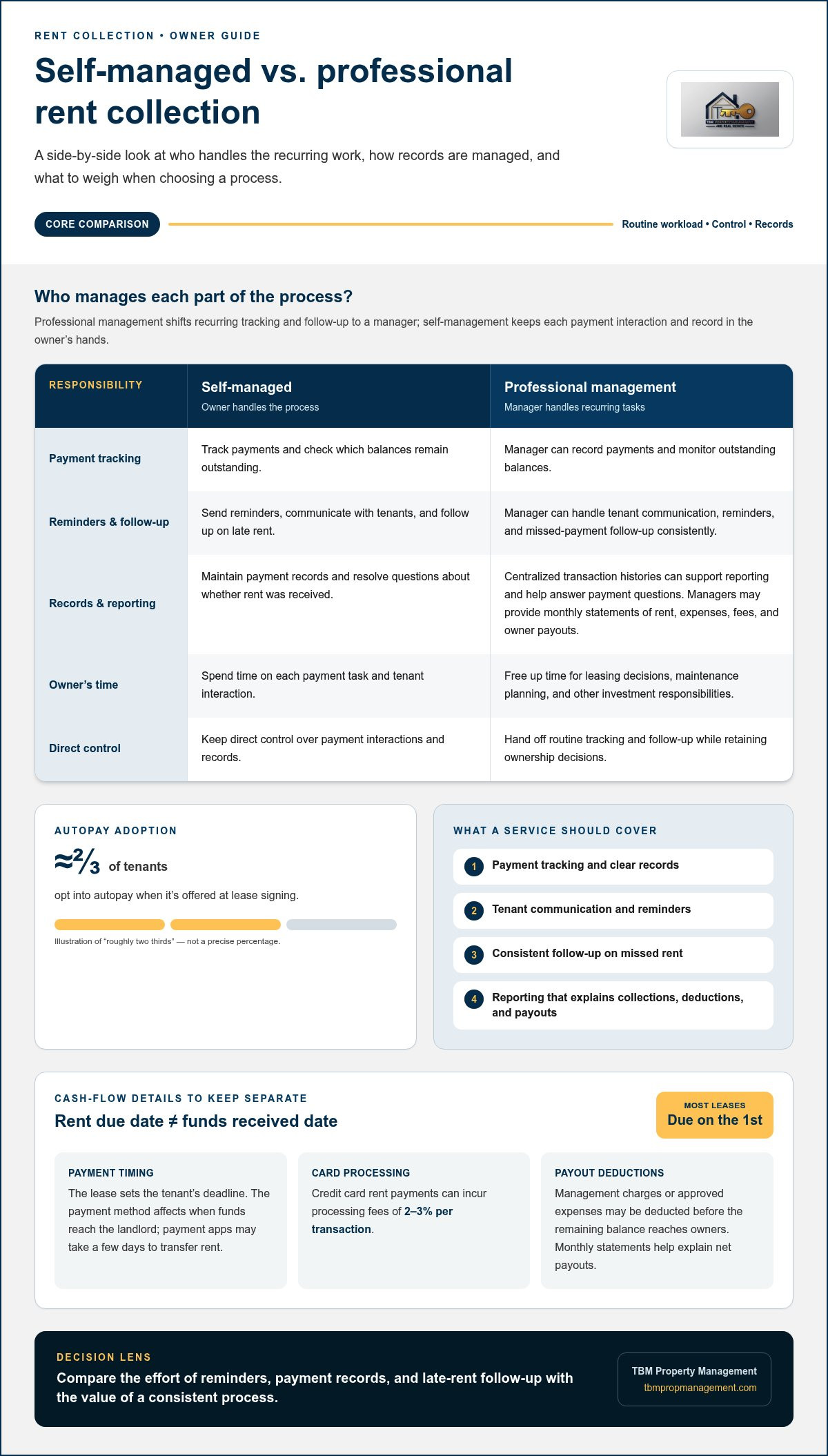
Landlords who collect rent themselves handle every step: tracking payments, sending reminders, communicating with tenants, and following up. A property manager can take on these recurring tasks, record payments, monitor outstanding balances, and maintain a consistent process. That gives owners more time for leasing decisions, maintenance planning, and other investment responsibilities.
Property management software can automate reminders and make it easier for tenants to submit payments. Roughly two thirds of tenants opt into autopay when it’s offered at lease signing. Centralized dashboards can also help owners with two or more properties review payment status without sorting through separate records. Clear transaction histories support financial reporting and help resolve questions about whether payment was received.
Compared with collecting rent yourself, using a rent-collection service shifts routine tracking and follow-up to a manager while you retain ownership decisions. Self-management gives you direct control but requires you to handle each tenant interaction and payment record personally.
When assessing a service, look at what its collection process covers: payment tracking, tenant communication, reminders, and follow-up on missed rent. Clear reporting matters too. Property managers may provide monthly statements detailing collected rent, expenses, fees, and owner payouts. A well-defined process shows how payments are recorded and overdue balances handled.
For owners who want support with these recurring tasks, professional rent collection services can make the handoff more manageable. The right arrangement should fit the property’s payment workflow and give owners clear records without requiring them to manage every reminder themselves.
3. When Is Rent Collected and When Do Landlords Receive Payment?
Leases for most rental properties make rent due on the first of each month. The lease sets the tenant’s payment deadline, but the date landlords receive the funds can depend on the payment method. Payment apps may take a few days to transfer rent into a landlord’s bank account.
A practical reminder schedule helps tenants prepare. Send a rent reminder a few days before the due date, then track whether payment arrives by the deadline. If the lease includes a grace period of several days, late fees may apply after it ends. State the late-fee policy in the agreement and apply it consistently to avoid confusion and uneven expectations.
In the United States, applicable state and local landlord-tenant rules, along with the lease, govern rent collection and late fees. Requirements vary by location, so the policy and any formal notices should follow the rules that apply to the rental property.
Online portals may offer ACH transfers, debit cards, credit cards, and recurring automatic payments. Credit card rent payments can incur processing fees of 2–3% per transaction. Compare payment methods when budgeting, since processing costs and transfer timing can affect the net amount and arrival date.
Automated reminders, accessible online payment options, and consistent follow-up can reduce missed payments and clarify expectations. If rent remains unpaid, managers may send formal notices or take further steps under the lease and applicable rules. Rent collection may also involve management charges or approved expenses deducted before the remaining balance reaches owners. Review monthly statements to understand collected rent, deductions, and net payouts.
Hiring a service can reduce your direct control over each payment interaction, and fees or processing delays can affect cash flow. When budgeting, account for the payment method, transfer timing, and deductions before relying on rent for scheduled property expenses.
4. What professional rent collection includes
A complete process connects the lease, tenant payments, and owner records. Start by entering the rent amount, due date, and payment instructions into the collection system. This gives each tenant a consistent way to pay and managers a reference when a payment is late, partial, or returned.
Digital portals can support ACH transfers, debit cards, credit cards, and recurring automatic payments. Multiple options give tenants practical ways to pay, while direct payment records help managers match transactions to the correct rental account. Online systems can also provide receipts, confirmations, and a digital history for reviewing disputed payments.
Collection work continues after a tenant submits payment. A manager records the transaction, checks whether the full amount arrived, and updates any outstanding balance. If a tenant pays only part of the rent, for example, the account should show both the amount received and the remaining balance. This keeps owners’ income reporting clear.
Checks require separate handling. Managers can document the check, deposit it securely, and record it in the owner’s ledger. If payment remains overdue, the manager can track reminders and formal notices alongside the account history. Keeping these records together creates a clear account of communication and collection activity.
Owner reporting is another part of the process. Monthly statements may show collected rent, maintenance expenses, fees, and the net payout. Digital transaction records can also support bookkeeping, tax preparation, and resolving payment questions. Review these records against the lease and account activity to understand how each rental’s income was calculated.
If you want help organizing tenant payments and records, get support with rent collection through a consistent management process.
TBM Property Management: Full-Service Property Management
TBM Property Management offers Full-Service Property Management, including rent collection, for owners who want support managing rental income and tenant payments. If following up on late rent, tracking transactions, or organizing records has become a regular burden, professional collection brings those tasks into a consistent management process.
Rent collection can also fit into broader rental management needs. Owners preparing a property for a new tenant, for example, may need tenant placement and leasing services alongside ongoing rent handling. Coordinating these services connects lease terms with the payment process from the start and gives owners support with routine management responsibilities.
If you’re ready to discuss rent collection support for your property, visit tbmpropmanagement.com.
Make Rent Collection Part of a More Manageable Plan
Consider what you want your rental investment to make possible beyond collecting rent. If recurring payment follow-ups take time away from planning, a more structured management approach can help you focus on other priorities. The benefits of professional rent collection matter most when they support how you want to oversee your property, not just the monthly transaction.
TBM Property Management offers Full-Service Property Management, along with tenant placement and leasing services. These options support owners at different stages, from finding a tenant to managing ongoing rental responsibilities. Choose the level of support that fits your property and the work you’re ready to delegate.
Taking the next step doesn’t need to mean changing everything at once. Start by identifying the payment tasks that create the most friction, then discuss a practical approach with a property management team. Contact TBM Property Management to talk about support for your rental. A clearer plan can help you move forward with confidence.
Frequently Asked Questions
Is online rent collection worth it?
Yes, online rent collection can make payment records easier to access and review. Tenants should use a secure internet connection, monitor their bank or card accounts, and report suspicious transactions promptly. For example, a tenant who notices an unfamiliar debit can flag it quickly, while a saved digital receipt can help clarify whether a legitimate rent payment went through.
What Happens When a Tenant Pays Late or Misses Rent?
Start by documenting the unpaid balance and contacting the tenant to understand why payment was missed. A shortfall caused by a payment problem calls for a different conversation than repeated nonpayment. Keep a dated record of messages and any agreed payment arrangement. If the issue persists, formal notices or further action must follow the lease and applicable local requirements.
What does a professional rent-collection process include?
Rent collection includes recording each tenant payment against the correct rental account and retaining a transaction history. This record can help resolve later disputes about whether rent arrived or how a balance was calculated. Managers can also prepare year-end income summaries for bookkeeping and tax preparation. Owners can compare those records with monthly statements when organizing rental income for annual reporting.
When Is Rent Collected and When Do Landlords Receive Payment?
Rent is due on the date specified in the lease, while the date funds reach a landlord depends on payment processing and transfer timing. A tenant’s payment confirmation doesn’t necessarily mean the money is already available in the owner’s bank account. For planning, distinguish the lease deadline from the deposit date, and use transaction records to track payments still being processed.
Communication: How are routine collection questions relayed and documented?
Tenants should send routine questions through the established communication channel and include the property address, payment date, and issue. A question about a missing receipt, for example, is easier to resolve when the tenant shares the transaction confirmation. Keep the response and supporting records with the rental account. This creates a clear timeline if the same payment question comes up again.
What are the main benefits of using a professional rent collection service?
The benefits of professional rent collection include spending less time on repetitive payment administration and keeping clearer records for financial planning. A manager can communicate with tenants consistently, track outstanding balances, and organize payment information for owner review. This can help when rent follow-up competes with other property responsibilities, while the landlord stays informed through reports and account records.