
Maryland Fair Housing: 2026 Guide for Landlords
Could a rental policy that appears neutral still create fair housing risk? In Maryland, consistent rules matter, but so does their effect. Understanding fair housing act compliance maryland can feel complicated when federal, state, and local requirements overlap, especially during advertising and tenant screening.
If you’re unsure which protected classes apply or whether your process treats applicants fairly, this guide explains the main federal and Maryland obligations and how to build clearer, more consistent rental practices. Fair housing rules affect advertising, screening, leasing, and day-to-day decisions after move-in. A written workflow can make those decisions easier to track, but it does not replace current legal guidance when a situation calls for it.
Below, you’ll find practical ways to review policies, document decisions, and identify questions that may need legal guidance. TBM Property Management coordinates leasing, tenant screening, rent collection, property maintenance, and inspections, helping owners organize ongoing rental operations. These services support administration, but they do not guarantee legal compliance or replace legal advice.
Key Takeaways
- Fair housing obligations can apply at every stage, from rental advertising to tenancy and housing services.
- Federal, Maryland, and local laws may protect different classes, so identify the rules that apply to each property.
- Support fair housing act compliance maryland with written screening criteria, consistent decisions, and attention to individual circumstances.
- Review policies, train decision-makers, and keep clear records of rental decisions and communications.
- Coordinated leasing, screening, rent collection, and inspections can ease administrative work, but do not guarantee legal compliance.
What Fair Housing Act Compliance Means for Maryland Landlords
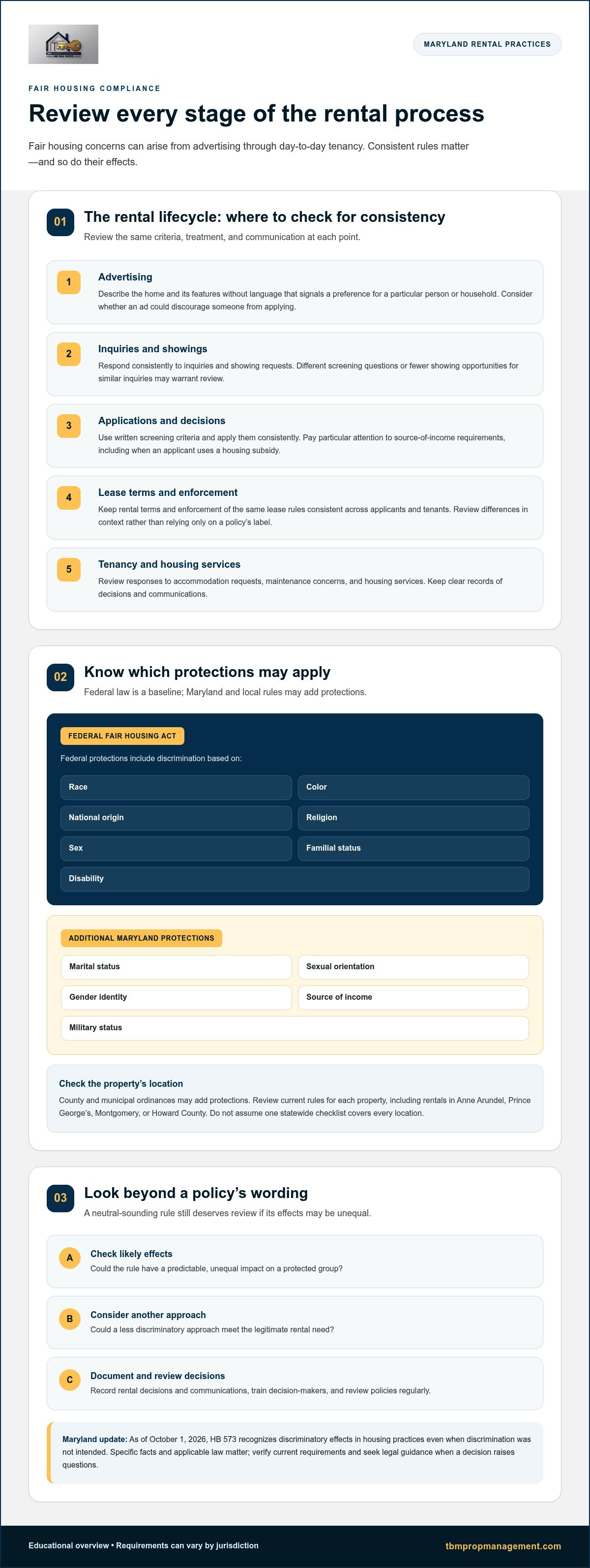
Fair housing obligations extend beyond the decision to approve or decline an applicant. The federal Fair Housing Act governs discrimination in housing-related transactions, including renting a home. It establishes protections against discrimination based on race, color, national origin, religion, sex, familial status, or disability. Maryland law adds protections, and local rules may add further requirements. Start by identifying which federal, state, county, and municipal rules apply to the property.
Fair housing concerns can arise during advertising, inquiries, showings, application decisions, lease negotiations, and the way tenants are treated after move-in. For example, asking two applicants different screening questions or responding inconsistently to similar requests may warrant review. A neutral-sounding policy also deserves scrutiny if its effects may disadvantage a protected group. Intent is not the only consideration; conduct and outcomes matter, too.
Which rental activities can raise fair housing concerns?
Review the full rental process. An advertisement may discourage some people from applying. An inquiry or showing request may receive different treatment depending on who asks. Application decisions or lease terms may not follow the same criteria for everyone. During a tenancy, inconsistent responses to accommodation requests, maintenance concerns, or housing services can also raise questions. These examples aren’t legal rulings. They show why policies should be reviewed in context, not judged only by their labels or the landlord’s intentions.
Maryland’s 2026 legal landscape also calls for attention to the effects of rental policies. As of October 1, 2026, HB 573 recognizes discriminatory effects in housing practices, even when discrimination wasn’t intended. Review whether a rule may have a predictable, unequal impact and whether a less discriminatory approach could meet a legitimate rental need. Fair housing act compliance maryland means applying rules consistently while remaining attentive to their real-world effects.
How federal, Maryland, and county rules fit together
Think of federal law as a baseline, not necessarily the full set of rules for every rental. Maryland protections include additional categories, such as marital status, sexual orientation, gender identity, source of income, and military status. County or municipal ordinances may provide further protections. Requirements can depend on the property’s location, so identify the rules for each jurisdiction rather than assuming one statewide checklist covers every rental.
For an overview of the federal law, consult the Federal Fair Housing Act Overview. For related rental obligations, the Maryland landlord-tenant rights guide offers additional context. This section is educational, not legal advice. Fair housing requirements and local ordinances can change, so verify current rules before adopting or revising rental policies. Seek legal guidance when a specific decision raises questions.
Protected Classes and Prohibited Housing Practices in Maryland
Knowing the protected classes is a starting point. Next, consider how rental decisions affect people in practice. Federal protections apply across housing transactions, while Maryland and local laws can extend them further. For fair housing act compliance maryland, don’t rely on a generic checklist when a property’s location may bring additional rules into play.
Federal protected classes and Maryland additions
The federal Fair Housing Act protects people from housing discrimination based on race, color, national origin, religion, sex, familial status, and disability. Maryland law also identifies marital status, sexual orientation, gender identity, source of income, and military status as protected classes. Pay particular attention to source-of-income requirements during screening, including when an applicant uses a housing subsidy.
Local protections can vary. Owners with rentals in Anne Arundel, Prince George’s, Montgomery, or Howard County should review the current county rules that apply to each property, along with relevant municipal requirements. Don’t assume a policy suitable for one location automatically fits another. Economic Action Maryland Fair Housing Resources can be a starting point for Maryland-focused education. Confirm the legal requirements that apply to the property’s jurisdiction.
Practices landlords should review
Small differences in routine decisions can raise questions worth examining. Review listings, showing procedures, lease terms, services, and enforcement for consistency. For example, an ad that describes a home in a way that discourages families, fewer showing appointments for certain inquiries, or different enforcement of the same lease rule may raise concerns depending on the facts and applicable law.
Other practices to review include steering prospective renters toward or away from particular areas, harassment by an owner or representative, and unfavorable treatment after someone raises a fair housing concern. These examples aren’t automatic legal conclusions. Context matters, and specific facts can affect how a rule applies.
- Advertising: Describe the property and its features without language that signals a preference for a type of person or household.
- Access and terms: Keep showing opportunities, rental terms, services, and rule enforcement consistent across applicants and tenants.
- Policy effects: Revisit neutral-sounding criteria if they may create a discriminatory effect. Consider whether another approach could serve the same legitimate rental purpose.
Write down your criteria before reviewing applications, then record the property-related reasons for each decision. This makes inconsistent treatment easier to spot and explain. TBM Property Management coordinates leasing and tenant screening as part of its rental management services, helping organize these day-to-day workflows without replacing legal guidance or guaranteeing compliance. Learn about TBM Property Management’s rental management support.
How Fair Housing Rules Apply to Advertising, Screening, and Leasing
Fair housing practices are easier to apply when you review each rental stage in order. A written process can help keep decisions consistent, but equal treatment doesn’t always mean identical treatment. A tenant with a disability may request a reasonable accommodation, which can involve changing a rule, policy, practice, or service to provide an equal opportunity to use and enjoy a home. Consider requests individually and consult current legal guidance if you’re unsure how to respond.
Listings and inquiries
Start with the listing. Describe the property and its features, not the kind of person you hope will rent it. Avoid wording that could suggest a preference or discourage people based on a protected characteristic. Then handle inquiries and showing requests through the same reliable process: share consistent property information, explain next steps clearly, and track follow-up so no inquiry is overlooked.
Screening and application decisions
Set screening criteria before reviewing applications. Criteria should relate to the rental decision, be applied consistently, and be reviewed for potential legal risk under current federal, Maryland, and local requirements. Don’t create a new standard for one applicant or assume a familiar practice is appropriate in every situation. Specific rules can depend on the facts and jurisdiction, including rules relevant to income sources or criminal-history screening.
Written, consistent process: Define criteria in advance, apply them in the same sequence, and document the property-related reasons for each decision.
Ad hoc decisions: Changing criteria mid-review, making exceptions without a clear basis, or relying on memory instead of records makes uneven treatment harder to spot and explain.
A process isn’t a substitute for judgment. If someone requests an accommodation during application or tenancy, consider the request respectfully and promptly rather than rejecting it simply because it differs from the standard process. Record the request, relevant communications, and response while protecting personal information.
Leasing and ongoing tenancy
Before signing, check that lease terms and related rules match what you communicated to the applicant. After move-in, use consistent procedures for services, maintenance requests, and enforcement. A disability-related request to change how a rule is applied differs from a request to make a physical change to the dwelling. The latter is generally called a reasonable modification. The details matter, so consider applicable requirements rather than treating either request as an ordinary exception.
Assistance-animal requests also need individual attention. They aren’t automatically ordinary pet requests, so don’t assume standard pet rules or charges apply. Follow current guidance when evaluating a request, and document the steps taken. A steady workflow can make fair housing act compliance maryland more manageable while leaving room to respond thoughtfully to individual circumstances.
A Practical Maryland Fair Housing Compliance Process for Rental Owners
A dependable process turns fair housing principles into repeatable rental operations. It won’t guarantee compliance, but it can make decisions easier to review, reduce avoidable inconsistency, and support thoughtful responses when questions arise. Use this workflow as a starting point, then check current legal requirements for each property and jurisdiction.
- Review applicable rules. Identify federal, Maryland, county, and municipal requirements relevant to the property. Revisit the review when laws or local rules change instead of assuming existing policies still fit.
- Standardize criteria and procedures. Put advertising, application review, leasing, communication, and accommodation procedures in writing. Define screening criteria before evaluating applicants, and make sure they serve a legitimate rental purpose.
- Train everyone involved. Owners, leasing staff, and anyone communicating with applicants or tenants should understand the approved process, know how to route requests, and avoid informal exceptions or promises.
- Document decisions and interactions. Keep accurate records of listings, applications, communications, decisions, and accommodation requests. Note the factual basis for decisions and retain records consistently under an appropriate recordkeeping policy.
- Reassess the process. Periodically review templates and outcomes for inconsistent treatment or unintended effects. Update procedures when requirements change or a review identifies gaps.
Build consistent written policies and records
Good documentation shows what information was considered and how written criteria were applied, not just the final decision. Keep relevant versions of listings and forms with application materials and communications. For accommodation requests, record the request, follow-up, and response respectfully while limiting access to sensitive information. These habits can reveal where a process needs clarification.
Respond carefully to complaints and accommodation requests
If a concern arrives, stay calm, acknowledge it respectfully, and preserve relevant records in their original form. Don’t alter documentation or retaliate against someone for raising a concern. Agency jurisdiction and filing deadlines are time-sensitive and depend on the circumstances, so verify current procedures promptly and seek qualified legal guidance for complex questions. The Maryland tenant-rights overview can help place fair housing practices within broader landlord responsibilities.
For owners, fair housing act compliance maryland is an ongoing practice, not a one-time form or policy. Organized leasing and screening workflows can support consistent rental administration, while legal questions call for current professional guidance. If coordinating applications, leasing, and ongoing operations is taking time away from other priorities, explore property management support from TBM Property Management.
When Maryland Landlords May Benefit from Professional Property Management
Managing a rental yourself gives you direct control, but it also means coordinating inquiries, applications, leases, rent payments, maintenance issues, and inspections. If those tasks compete with other responsibilities, a professional manager can organize the day-to-day workflow. That support may make established procedures easier to follow, but neither owner management nor professional management guarantees fair housing compliance. Landlords remain responsible for understanding applicable requirements and getting legal advice on fact-specific questions.
What property management can support, and what it cannot replace
With an owner-managed rental, you handle communication and decisions personally and keep processes and records organized. A property manager can coordinate leasing and tenant screening, helping maintain a consistent administrative process. Full-service management can also coordinate rent collection, property maintenance, and inspections, reducing the number of operational tasks an owner manages directly. These services support rental operations, not legal advice or guaranteed legal outcomes.
For example, written screening steps can move applications through the same workflow, while organized leasing administration can help track communications and decisions. Still, a management process won’t resolve every legal question. Accommodation requests, unusual screening circumstances, or a complaint may call for current, qualified legal guidance. Owners should understand how responsibilities are handled and remain attentive to the rules that apply to their property.
A professional property management guide can help you weigh how management fits your rental operations and priorities.
Consider local support for Laurel and surrounding counties
Local familiarity can be useful when coordinating rentals across Maryland jurisdictions. TBM Property Management is based in Laurel and serves Anne Arundel, Prince George’s, Montgomery, and Howard counties. The company brings more than 12 years of local real estate experience and provides tenant placement, leasing, screening, rent collection, maintenance coordination, and property inspections.
Professional support may be useful if you’re managing recurring tasks, want help coordinating leasing and ongoing operations, or find it difficult to keep records and communications organized. Identify which tasks take the most time and where consistent procedures would help. Clear expectations between owner and manager also make it easier to understand who handles routine administration and when a legal question needs separate attention.
To organize leasing and ongoing rental operations, explore full-service property management in Maryland with TBM Property Management.
Make Your Next Rental Decision More Deliberate
Fair housing act compliance maryland is an ongoing part of responsible rental ownership, not a task to set aside until a concern arises. Choose one practical next step: review the template or routine you use most often, identify where decisions rely on memory, and make the process easier to apply consistently. A focused review can help you spot questions worth addressing before they become a larger operational challenge.
If coordinating tenant placement, leasing, screening, and ongoing property operations is stretching your time, property management can provide organized operational support. Legal questions about a specific situation should go to qualified counsel. The right operational support can bring structure to your rental workflow without replacing your responsibility to stay informed.
Explore full-service property management in Maryland to take a practical step toward more organized rental operations.
Frequently Asked Questions
Which protected classes are covered by the Fair Housing Act in Maryland?
Federal law protects against housing discrimination based on race, color, national origin, religion, sex, familial status, and disability. Maryland law adds protections including marital status, sexual orientation, gender identity, source of income, and military status. Counties and municipalities may provide additional protections. Because local rules and legal language can change, check current requirements for the property’s jurisdiction rather than relying on a statewide list alone.
Does Maryland protect renters based on source of income?
Yes. Maryland includes source of income among its protected classes, and changes effective October 1, 2026, generally restrict landlords from rejecting applicants using income-based housing subsidies based on income, credit score, or credit issues from before they received the subsidy. Details and applicable exceptions can depend on the circumstances and local requirements. Verify current state and county rules before applying screening criteria to a particular applicant.
Can a Maryland landlord refuse a housing voucher?
There isn’t a safe blanket yes-or-no answer. Maryland’s source-of-income protections and the changes effective October 1, 2026, generally limit refusals based on an applicant’s use of an income-based subsidy, including certain income or credit factors. Other screening criteria and applicable exceptions may affect a specific decision. Check current state and local requirements, and assess the applicant using relevant criteria applied consistently.
Can a landlord ask an applicant about a disability or assistance animal?
Generally, avoid asking applicants whether they have a disability or requesting medical details as part of routine screening. If someone requests a disability-related accommodation, handle the request individually and follow current rules on what information may be requested. An assistance-animal request isn’t automatically an ordinary pet request. Because permitted questions and documentation standards can depend on the situation, consult current fair housing guidance before asking for details or deciding how to respond.
Does the Fair Housing Act apply to a small or owner-occupied rental?
It may, but some federal and state exemptions can depend on details such as the type of property, ownership, and how it’s rented. Don’t assume a small building or owner occupancy automatically removes fair housing obligations. Exemptions may also be limited or unavailable in particular circumstances, including advertising. Before relying on an exemption, verify the current law that applies to the rental and seek qualified legal guidance if the facts are unclear.
How long does a tenant have to file a fair housing complaint in Maryland?
There isn’t one deadline that safely covers every complaint route. The time limit may differ depending on whether a tenant files with a federal, state, or local agency or pursues another legal option. Agency jurisdiction and filing procedures can also vary. Because missing a deadline can affect available options, check current guidance from the agency with jurisdiction as soon as possible and get qualified legal advice about the specific situation.
What should a Maryland landlord do after receiving a fair housing complaint?
Respond calmly, acknowledge the concern respectfully, and preserve relevant records, including listings, applications, messages, and decision notes. Don’t alter documentation or retaliate against the tenant or applicant. Avoid promising an outcome before reviewing the facts. Complaint procedures and deadlines can be time-sensitive, so promptly obtain qualified legal guidance and verify which agency has jurisdiction. Keep communications factual, professional, and consistent while the matter is reviewed.