Maryland Landlord Eviction Process: The 2026 Comprehensive Legal Guide
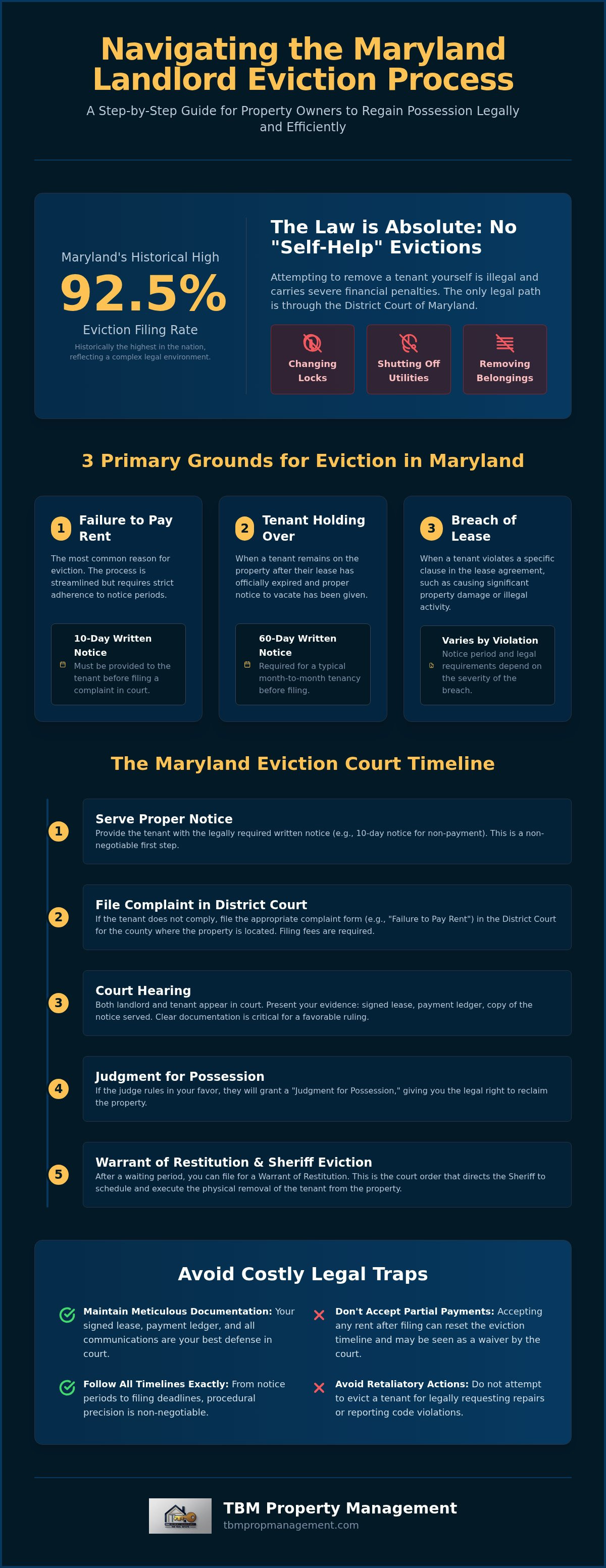
Did you know that Maryland has historically seen eviction filing rates as high as 92.5%, the highest in the country? For a property owner in Prince George's or Anne Arundel County, these numbers represent more than just data; they reflect the high-stakes reality of protecting your financial future. Mastering the maryland landlord eviction process can feel like walking through a legal minefield, especially with filing fees now reaching $90 and strict 2026 regulations regarding security deposits and late fee caps.
We understand that watching your rental income disappear while you struggle with complex court paperwork is incredibly draining. It's stressful to worry about "self-help" legal penalties or the specific local rules that vary from one county to the next. This guide provides a clear roadmap of the current court process, ensuring you have the knowledge to avoid common filing mistakes and regain control of your property. We'll walk you through the essential notice periods and the step-by-step path to a Warrant of Restitution, giving you the peace of mind that your situation is manageable.
Key Takeaways
- Understand why Maryland law strictly prohibits "self-help" evictions and how to navigate the judicial system without risking heavy fines.
- Identify the three primary legal grounds for regaining possession, including the most common path for non-payment of rent.
- Master the step-by-step maryland landlord eviction process timeline, from serving the correct 10-day notice to filing your complaint in the District Court.
- Learn how to avoid costly legal traps like retaliatory eviction claims or accidentally resetting your timeline by accepting partial payments.
- Discover how professional tenant screening and proactive rent collection can stop eviction headaches before they ever start.
Understanding the Maryland Eviction Landscape in 2026
Are you feeling the heavy emotional burden of a tenant relationship that has soured? It's a situation many property owners face, but you don't have to carry that weight alone. In the State of Maryland, an eviction isn't just a physical removal; it's a strictly judicial procedure. This means that every step you take must align perfectly with current statutes to avoid costly setbacks. The eviction process is designed to protect the rights of both parties, but for a landlord, it requires absolute procedural precision. While the rules are strict, they provide a stable, manageable path to regaining control of your investment.
Resist any urge to take matters into your own hands. "Self-help" evictions, such as changing locks, removing belongings, or shutting off utilities, are illegal and carry severe financial penalties. If you attempt these shortcuts, you'll likely find yourself facing lawsuits that far exceed the cost of lost rent. The Maryland Landlord-Tenant Act updates for 2026 have reinforced these protections, making it more critical than ever to follow the letter of the law. By following the maryland landlord eviction process correctly, you protect yourself from liability and ensure the court views you as a compliant, professional owner.
The Role of the District Court of Maryland
Every legal action to remove a tenant must begin in the District Court. Whether your property is located in Laurel or you're appearing at the courthouse in Upper Marlboro, the court acts as the only authority capable of granting a judgment for possession. Your role is to serve as the petitioner, presenting facts and evidence, while the court holds the power to issue a Warrant of Restitution. You can't skip this step. Understanding the specific logistics of local court locations in Prince George’s or Anne Arundel counties is vital, as filing in the wrong jurisdiction or missing a local rule can reset your entire timeline.
Why Documentation is Your Best Defense
Do you have a signed, written lease agreement for your rental? In Maryland courts, your documentation is your only shield. Judges require "clear and convincing" evidence before they'll rule in your favor. You need to maintain a meticulous ledger that tracks every payment, late fee, and communication. If a tenant claims they paid or argues that you didn't provide the required 10-day notice for non-payment, your detailed records will be what secures your victory. This level of detail isn't just helpful; it's the professional standard required to win your case and find the relief you're looking for.
The 3 Primary Grounds for Eviction in Maryland
Do you know the specific legal reason you're seeking to regain possession of your property? Identifying the correct grounds is the first hurdle in the maryland landlord eviction process. If you choose the wrong category or file the incorrect form, the court will likely dismiss your case, forcing you to start from scratch and lose even more rental income. In Maryland, legal actions for possession generally fall into three distinct categories, each with its own set of rules, notice requirements, and judicial expectations.
Failure to Pay Rent (FTPR) Procedures
Failure to Pay Rent is the most common action because it's often the fastest path to a court date. Before you can file a complaint in the District Court, you must provide the tenant with a written 10-day notice of your intent to file. This grace period allows the tenant a final window to settle their debt. If they don't pay, you can then proceed with the legal filing. It's vital to remember the "Right to Redeem." In most cases, a tenant can stop the eviction at almost any point, even on the day the sheriff arrives, by paying all past-due rent and court costs.
Are you filing in Prince George’s County or Montgomery County? While the state law is uniform, local court administrative habits can vary. For instance, some jurisdictions are more stringent about the verification of rental licenses before a case can proceed. Following the Maryland Attorney General's guidance ensures you're meeting these high standards of compliance. If managing these deadlines feels overwhelming, our full-service property management can take the lead on rent collection to keep your investment on track.
Tenant Holding Over and Breach of Lease
What happens when a lease expires but the tenant refuses to leave? This is known as "Tenant Holding Over." For a typical month-to-month tenancy in Maryland, you're required to give 60 days' written notice before you can file for an eviction. If the tenant remains after that period, you then petition the court for a judgment of possession. This process is slower than a non-payment case but is the correct legal remedy for ending a relationship with a tenant who has stayed past their welcome.
Breach of Lease cases are different. These involve non-monetary violations, such as unauthorized pets, excessive noise, or property damage. To succeed here, you must prove a "substantial breach" occurred. Maryland courts don't take these cases lightly; you'll need documented evidence and must provide the tenant with a 30-day notice to vacate (or 14 days if there's an imminent danger). For a deeper look at these requirements, review our Maryland Landlord Tenant Rights guide to ensure your documentation is airtight.
Step-by-Step: The Maryland Eviction Court Timeline
Have you ever felt like you're just waiting for the next shoe to drop while your rental income stalls? The maryland landlord eviction process follows a strict chronological order that requires patience and precision. If you miss a single deadline or skip a procedural step, the court may require you to start the entire sequence over. Understanding this timeline is the first step toward finding the relief and security you need as a property owner.
- Step 1: Serving Notice. Depending on your legal grounds for eviction, you'll start with a 10-day, 14-day, or 30-day written notice. This is a non-negotiable prerequisite.
- Step 2: Filing the Complaint. Once the notice period expires, you'll file a formal complaint in the District Court of the county where the property is located.
- Step 3: The Court Hearing. Both parties appear before a judge. If you've maintained the meticulous documentation we discussed earlier, you'll secure a Judgment for Possession.
- Step 4: The Appeal Window. Maryland law provides a 4-day window for the tenant to appeal the judgment. You cannot take further action until this period passes.
- Step 5: The Warrant of Restitution. After the appeal window closes, you petition the court for a warrant, which is the legal order that allows the sheriff to perform the eviction.
The Warrant of Restitution Explained
It's a common misconception that winning your court case means the tenant must leave immediately. A Judgment for Possession simply confirms your right to the property; it doesn't authorize you to remove anyone. You must file for a Warrant of Restitution to involve law enforcement. It's vital to act quickly because these warrants typically expire after 60 days in Maryland. In jurisdictions like Prince George’s County, the Sheriff’s Office handles the final scheduling, and they'll notify you of the specific date and time when the eviction will occur.
Post-Eviction: Handling Abandoned Property
What happens to the furniture and personal items left behind after the sheriff completes the eviction? Maryland law generally follows an "eviction to the curb" policy, meaning the tenant's belongings are moved to the nearest public right-of-way. However, local rules can vary, and you must be careful not to violate any remaining tenant rights during this transition. This is often the most physically and emotionally draining part of the process. Our team providing property management in Laurel, MD handles these clean-out logistics professionally, ensuring your property is returned to rent-ready condition without the personal stress of a "trash-out" day.
Avoiding Common Legal Pitfalls and Retaliation Claims
Are you worried that a simple procedural mistake could cost you thousands in legal fees? Even the most diligent property owners can fall victim to "accidental" retaliation claims. In the maryland landlord eviction process, timing and intent are everything. A retaliatory eviction occurs when a landlord attempts to remove a tenant primarily because the tenant exercised a legal right, such as reporting a code violation or joining a tenant organization. If a court finds you guilty of retaliation, you could face massive fines and be forced to pay the tenant's legal fees. This is why documenting every repair request and response is your strongest shield against these accusations.
One of the most common traps involves accepting partial rent payments. If you've already filed a Failure to Pay Rent complaint and the tenant sends you a portion of what they owe, stop. Accepting even a small fraction of the balance can legally reset your entire timeline, forcing you to issue a new 10-day notice and pay filing fees again. Similarly, you must be precise with how you deliver notices. While certified mail is often preferred for records, some jurisdictions require specific posting methods on the property itself. Missing these nuances can lead to an immediate dismissal of your case in the District Court.
The Critical Importance of Rental Licensing
Did you know that in Prince George’s and Montgomery counties, your case might be dead on arrival if your rental license isn't current? Many Maryland jurisdictions strictly bar landlords from filing eviction actions unless the property is properly licensed and lead-paint compliant. You must verify your Lead Paint Certificate status for any property built before 1978 before you even think about heading to court. Ensuring you are choosing professional property management means these critical compliance dates are tracked automatically, so your legal standing is never compromised by an expired document.
Fair Housing Compliance During Eviction
Consistency is your best defense against discrimination claims. You must apply your eviction criteria uniformly to every tenant, regardless of their background or situation. If you allow one tenant extra time to pay but file immediately against another, you open the door to Fair Housing challenges. Keep a detailed log of all interactions to disprove any claims of harassment or bias. The Maryland Fair Housing Act prohibits discrimination in housing based on protected classes such as race, religion, disability, and source of income, and these protections remain in full effect during the eviction process. If you want to ensure your property remains profitable and compliant, our full-service property management can handle these delicate interactions with professional care.
How TBM Property Management Protects Your Maryland Investment
Do you find yourself losing sleep over the complexities of the maryland landlord eviction process? It's a common burden for self-managing owners, but it doesn't have to be your reality. At TBM Property Management, we act as a stabilizing force, transforming a high-stress legal exercise into a manageable, professional procedure. By positioning ourselves as your dedicated local partner, we handle the delicate balance of tenant relations and legal compliance so you don't have to. Our goal is to provide the relief you've been looking for while ensuring your asset remains protected and profitable.
Our approach begins long before a court date is ever set. We believe the most effective way to manage an eviction is to prevent one through rigorous tenant screening. With over 12 years of local real estate expertise in PG, Montgomery, Howard, and Anne Arundel counties, we've developed a keen eye for red flags that others might miss. If a tenant does fall behind, our proactive rent collection system identifies issues within the first 48 hours. This early intervention often allows us to resolve payment problems through firm communication rather than immediate litigation, saving you the $90 filing fee and protecting your monthly cash flow.
The TBM Tenant Placement Advantage
Finding the right renter is a precision task that requires deep market knowledge. By leveraging our tenant placement services, you gain access to a wealth of data on local rental trends and high-quality applicant pools. We understand the specific nuances of the Laurel and Upper Marlboro markets, which allows us to minimize vacancy periods while ensuring every new lease is backed by a thoroughly vetted individual. If an eviction does become necessary, having a professionally drafted lease agreement ensures the maryland landlord eviction process moves forward without the documentation hurdles that often stall amateur filings.
Comprehensive Oversight and Maintenance
Success in the District Court depends entirely on the quality of your evidence. We use Property Meld to meticulously document the condition of your property and the history of every maintenance request. Our regular property inspections serve a dual purpose: they protect your asset's physical value and provide the documented evidence needed for breach of lease cases. When you feel ready to regain your peace of mind, let TBM handle the stress of Maryland property management for you. We coordinate directly with legal counsel and the Sheriff’s Office, standing as your local expert from the first notice to the final clean-out.
Regain Control and Secure Your Rental Future
The maryland landlord eviction process is undoubtedly complex, but it's a manageable legal remedy when you have the right roadmap. You've learned that judicial precision and airtight documentation are your best defenses against the loss of rental income. By avoiding "self-help" traps and staying compliant with 2026 licensing rules, you protect your long-term financial security and your professional reputation. Mastering these steps ensures you stay in control while the court handles the final resolution.
If the emotional burden of managing these details is becoming too much, it's time for a change. With 12+ years of local Maryland expertise, we provide the stabilizing force you need to regain your peace of mind. We proudly serve Prince George's, Montgomery, Howard, and Anne Arundel counties with a focus on dedicated tenant relations and total legal compliance. Our team is committed to the high standards your investment deserves, ensuring every process is handled with seasoned professionalism.
Get Your Free Rental Analysis and Stress-Free Management Quote
You don't have to navigate this journey alone. We're ready to help you reclaim your time and your investment starting today.
Frequently Asked Questions
How long does the eviction process take in Maryland?
The typical timeline for the maryland landlord eviction process is between 3 to 8 weeks. This period starts with your initial written notice and ends with the tenant's removal by a sheriff. Administrative backlogs in local District Courts, particularly in high-volume areas like Prince George's County, can sometimes extend this window.
Can I evict a tenant in Maryland without a written lease?
Yes, you can legally evict a tenant even if you only have an oral agreement. In the absence of a written contract, Maryland law generally treats the arrangement as a month-to-month tenancy. You'll still need to follow the standard 60-day notice requirement for termination before filing any legal action in court.
What is the 10-day notice to quit in Maryland?
The 10-day notice is a mandatory written warning you must provide for a Failure to Pay Rent case. It informs the tenant of your intent to file for eviction if they don't settle their debt within that timeframe. This 10-day window is a non-negotiable legal prerequisite before you can approach the District Court.
Can a tenant stop an eviction by paying rent at the court hearing?
Yes, this is known as the "Right of Redemption." A tenant can stop the process by paying all past-due rent and court costs at any time before the sheriff completes the eviction. However, if you've already won three or more rent judgments against that tenant in the previous 12 months, this right may no longer apply.
Do I need a lawyer to evict a tenant in Maryland?
No, Maryland law doesn't require landlords to hire an attorney to navigate the maryland landlord eviction process. Many property owners choose to represent themselves or partner with a professional property management firm. A manager can handle the complex paperwork and ensure you don't miss critical filing deadlines that could reset your case.
What happens if a tenant refuses to leave after the eviction date?
You cannot personally remove a tenant; only the sheriff has the authority to perform a physical eviction. If the tenant remains past the date set by the court, the sheriff will arrive to execute the Warrant of Restitution. They'll oversee the removal of the tenant and their belongings to the nearest public right-of-way.
How much does it cost to file an eviction in Maryland?
The filing fee for an eviction in Maryland is currently $90 for a Failure to Pay Rent case. This fee was increased from a much lower rate in late 2024 to discourage frequent or serial filings. You should verify current fees with the Maryland Judiciary website as local service fees for the sheriff may also apply.
Can I evict a tenant for a lease violation that isn’t related to rent?
Yes, you can file a Breach of Lease action for non-monetary violations like unauthorized pets or property damage. For these cases, you're required to provide a 30-day written notice to vacate. If the tenant's actions pose a clear and imminent danger to others, the required notice period is shortened to 14 days.