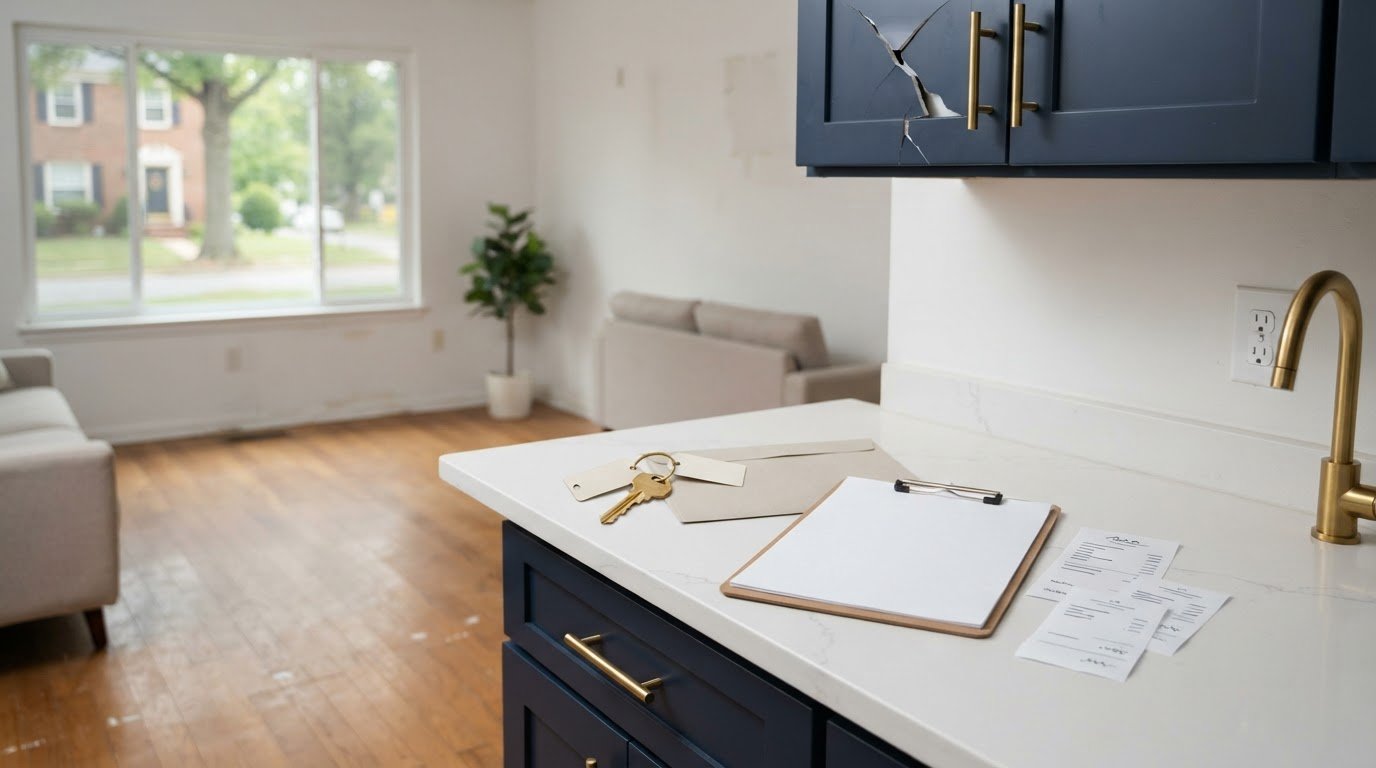
Maryland security deposit deductions and what landlords can keep
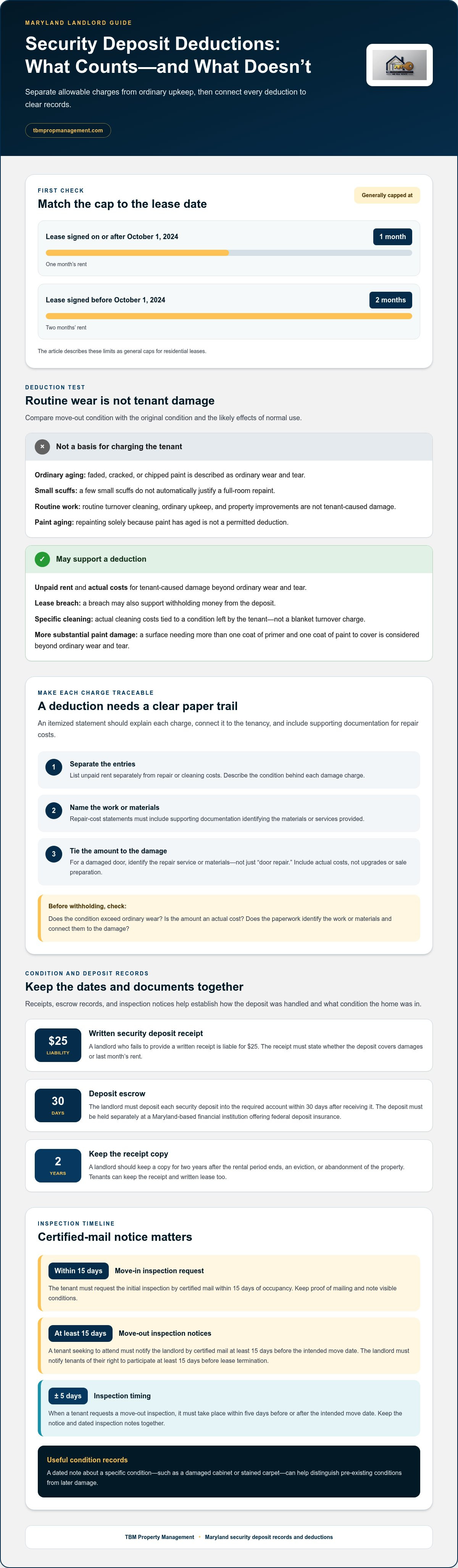
Maryland landlords may generally keep unpaid rent and actual costs for tenant-caused damage beyond ordinary wear and tear, but not for ordinary wear or property improvements. For residential leases signed on or after October 1, 2024, the security deposit is generally capped at one month’s rent; for leases signed before that date, the maximum is two months’ rent. Understanding the rules for handling security deposit deductions in Maryland means looking at both limits and the evidence required to support any amount withheld.
It’s easy to see why handling security deposit deductions in Maryland can feel unclear: normal aging, cleaning, and repair costs aren’t always easy to distinguish. This guide explains what a Maryland security deposit covers, what landlords may deduct, and how receipts, inspections, deadlines, deposit limits, and tenant remedies fit together. Use this practical overview to understand what belongs in a deduction statement and which steps matter when a deposit is returned.
Key Takeaways
- Separate unpaid rent and tenant-caused damage beyond ordinary wear from routine aging or property improvements when assessing deductions.
- Match the security deposit limit to the lease date: leases signed on or after October 1, 2024, generally have a one-month cap; earlier leases have a two-month cap.
- Keep clear records of the deposit and property condition, and follow the certified-mail notice steps if a tenant wants to attend an inspection.
- Send an itemized list of claimed charges and actual costs within the required deadline, with supporting documentation for repair expenses.
- Know the options available when a deposit is withheld improperly, including the deadline for bringing a claim.
Allowable deductions for damage beyond normal wear and tear
Maryland landlords may deduct unpaid rent and actual costs for tenant-caused damage beyond ordinary wear and tear. The key is to tie each charge to a lease obligation or specific damage, not routine aging.
Damage Beyond Normal Wear
Damage beyond normal wear is tenant-caused harm that goes beyond the ordinary deterioration of a rental home. Faded, cracked, or chipped paint is an example of ordinary wear and tear in Maryland. A landlord can’t charge a tenant to repaint solely because the paint has aged.
Compare the move-out condition with the original condition and the likely effects of normal use. For example, a painted surface that needs more than one coat of primer and one coat of paint to cover is considered damage beyond ordinary wear and tear. A few small scuffs, by contrast, don’t automatically justify charging for a full-room repaint.
Permitted deductions include unpaid rent and tenant-caused damage beyond ordinary wear and tear. A lease breach may also support withholding money from the deposit. For each proposed charge, identify what happened, how it relates to the tenancy, and why the work goes beyond ordinary upkeep.
Cleaning is not a blanket deduction. Maryland landlords may deduct only actual costs for cleaning or damage beyond ordinary wear and tear. A specific cleaning expense tied to a condition left by the tenant is different from routine turnover work or improvements that enhance the property’s value.
Damage and Repair Cost Documentation
Damage and repair cost documentation is a written, itemized record connecting a deduction to work performed or materials supplied. It explains each charge instead of presenting a deposit balance with unexplained expenses.
Maryland itemized statements for repair costs must include supporting documentation identifying the materials or services provided. For example, a statement about repairing a damaged door should identify the repair service or materials, rather than simply say “door repair.” Describe the work specifically enough to show how the cost relates to the damage.
Build the written statement from individual entries. List unpaid rent separately from repair or cleaning costs, and describe the condition behind each damage charge. Then keep supporting paperwork identifying the materials or services. This makes it easier to distinguish a tenant-caused repair from routine maintenance.
Review each item before deducting it. Does it reflect actual cleaning or damage costs? Does the condition exceed ordinary wear, and does the paperwork support the amount charged? Don’t include property upgrades or sale preparation as tenant damage. A clear statement and relevant documentation make the distinction between reasonable repair and ordinary upkeep visible.
Security deposit receipts and inspection rights
A security deposit receipt is a written record of the amount received and its purpose. Inspection rights let tenants document a rental’s condition at move-in and move-out. Together, these records can clarify the property’s condition and how the deposit was handled.
According to the Maryland General Assembly, a landlord who fails to provide a written security deposit receipt is liable for $25. The receipt must state whether the deposit covers damages or last month’s rent. Keep it with the written lease and payment records, so the amount and stated purpose remain clear.
Escrow is a separate account used to hold deposit funds apart from a landlord’s money. According to the Maryland General Assembly, a landlord must deposit each security deposit into the required account within 30 days after receiving it. Maryland landlords must hold deposits in a separate escrow account at a Maryland-based financial institution that offers federal deposit insurance.
A landlord should keep a copy of the deposit receipt for two years after the rental period ends, an eviction, or abandonment of the property. Tenants can keep the receipt and written lease to create a clear record if the amount or purpose is later disputed. When reviewing a complicated accounting, organize these documents before discussing the issue with an attorney.
A move-in inspection records the rental’s condition at the start of occupancy. A tenant must request the initial inspection by certified mail within 15 days of occupancy. Make the request in writing, keep proof of mailing, and record visible conditions, such as a damaged cabinet or stained carpet. These details can help distinguish pre-existing conditions from later damage.
A move-out inspection documents the property’s condition near the end of the tenancy. A tenant seeking to attend must notify the landlord by certified mail at least 15 days before the intended move date, according to the Maryland General Assembly. The landlord must notify tenants of their right to participate at least 15 days before lease termination.
When a tenant requests a move-out inspection, it must take place within five days before or after the intended move date. Keep the notice and inspection notes together. A dated record describing a specific condition is more useful than a general note saying a room was “fine.”
For landlords managing condition records across a rental, property inspections can help document the home at key points in a tenancy.
Tenant remedies for improper withholding
A tenant can challenge a deposit deduction that lacks a lawful basis or required support. In Maryland, the next steps depend on the type of withholding and the records available.
Remedies for Unlawful Withholding
A remedy for unlawful withholding is a step a tenant takes to recover a deposit or contest an improper charge. Start by comparing the landlord’s written deductions with the lease, move-in and move-out records, payment history, and repair documentation.
Identify the specific disagreement, such as rent that was already paid or a charge for ordinary wear and tear. Keep copies of relevant records and communicate the issue in writing so the disputed amount and reason are clear. A concise message can ask for the basis of a charge and explain which records contradict it.
If the dispute remains unresolved, a tenant may bring a security-deposit lawsuit. In Maryland, a tenant must file no later than two years after the tenancy ends. Maryland District Court claims to recover a security deposit can seek up to $5,000 in damages. The claim should explain what was withheld, why the tenant disputes it, and what amount they seek to recover.
Organize the evidence before filing: include the written lease, deposit receipt, payment records, notices, inspection notes, and the landlord’s statement. For example, a rent ledger showing payment can help dispute an unpaid-rent deduction. Photos and dated inspection records can help explain why a damage charge is disputed.
Penalties for Bad-Faith Withholding
A bad-faith withholding penalty is a potential consequence when a landlord improperly keeps deposit money. Maryland’s rules also provide specific consequences for certain failures, so tenants should distinguish a missing damage statement from an excessive deposit charge.
A landlord who fails to provide the required damage statement forfeits the right to withhold any part of the deposit for damages. This rule concerns damage deductions; it does not automatically invalidate every other claimed amount. Compare the statement, rental records, and reason for each charge.
Charging more than Maryland’s legal deposit maximum can carry a separate consequence: the landlord may have to pay the tenant up to three times the excess amount. The possible award concerns the amount above the cap, not automatically the entire deposit. A tenant should keep the lease and payment records showing the amount collected.
Before choosing a remedy, separate each disputed issue: unpaid rent, damage, missing documentation, or an excessive deposit. Then match each issue to the relevant record and deadline. A clear timeline, from deposit payment through the end of the tenancy, helps tenants explain what was withheld and why they believe they’re entitled to recover it.
Maryland security deposit cap
A security-deposit cap is the maximum amount a landlord may collect as a rental deposit. Maryland’s cap is statewide; the key factors are when the lease was signed and whether a specific exception applies.
For residential leases signed on or after October 1, 2024, landlords generally may collect no more than one month’s rent. For leases signed before October 1, 2024, the maximum is two months’ rent. Check the original agreement’s signing date, not simply the date a tenant moves in or pays the deposit.
The one-month limit applies per dwelling unit, regardless of how many tenants share the home. For example, a group of tenants doesn’t create a separate one-month allowance for each person. Compare the total deposit for the unit with the rent stated in the applicable lease, then note whether the agreement is new or continues an older tenancy.
A narrow exception allows up to two months’ rent for some leases signed on or after October 1, 2024. The tenant must qualify for utility assistance through the Department of Human Services. The lease must also require utility payments directly to the landlord, and both parties must agree in writing to the deposit amount. Without all these conditions, the general one-month cap applies.
A lease extension or renewal made by an addendum to the existing agreement is not considered a new lease. The landlord therefore doesn’t have to return the portion of an existing deposit above one month’s rent solely because of the cap change. A renewal made through a completely new lease agreement is different: the one-month restriction applies to new leases created after October 1, 2024.
Maryland landlords don’t have to retroactively adjust deposits for leases established before the new law took effect. The signing date therefore matters when determining whether an older deposit can remain above one month’s rent. Keep the original lease and renewal documents together: an addendum and a newly signed lease can produce different outcomes.
If a landlord charges more than the legal maximum, the tenant may be entitled to up to three times the excess amount. To assess a possible overcharge, identify the applicable lease, calculate the permitted cap from its rent, and compare that figure with the total deposit collected. Keep payment records and written agreements showing the amount and timing.
For example, if a lease signed after the law took effect requires a deposit above one month’s rent, check whether every utility-assistance exception condition applies. If the tenant and landlord used an addendum instead of a new lease, keep that document too. These details help distinguish a permitted deposit from an excess charge.
What are Maryland's rules for security deposit deductions?
A security deposit deduction is money a landlord withholds for an allowed rental-related charge. Maryland rules require a written accounting, a deadline, and a connection between each charge and the tenancy.
According to the Maryland General Assembly, a Maryland landlord must send the tenant a written list of claimed charges and actual costs within 45 days after the rental period ends. The list should make each charge understandable on its own. Separate unpaid rent, cleaning, and repair expenses rather than combining them into a single unexplained balance.
Start with the rental’s condition and the tenant’s account. For each proposed deduction, record the reason, amount, and supporting paperwork. A rent ledger can support an unpaid-rent charge; an invoice can identify a repair service. This step-by-step record helps distinguish a tenant-related expense from ordinary upkeep.
An itemized statement is a written breakdown of charges claimed against the deposit. Maryland repair-cost statements must include supporting documentation identifying the materials or services provided. For example, a repair entry should identify the materials used or service performed, not simply state “maintenance.” A landlord may use an estimate for costs to be incurred, but should identify it as an estimate.
If an estimate exceeds the actual repair expense, the excess must be returned within 30 days after repairs are complete. Keep the estimate, final invoice, and proof of any refund together. That sequence shows how the initial figure changed and when the remaining balance was returned.
The deadline changes after eviction, ejection, or abandonment before the lease ends. In those circumstances, the tenant has 45 days after leaving to mail a request for the deposit and provide a new address. After receiving that notice, the landlord has 45 days to send the deduction list and costs and return the remaining deposit with applicable interest. Keep a copy of the letter and mailing proof.
A missing damage statement can affect the landlord’s right to deduct for damage. If the landlord fails to provide the required statement, they forfeit the right to withhold any part of the deposit for damages. Keep that issue distinct from unpaid rent or other charges, and compare the claimed amount with the statement and supporting records.
Maryland security-deposit law is governed by Section 8-203 of the Maryland Real Property Code. A pet deposit also counts as a security deposit because it protects against possible pet-caused property damage. So include it when reviewing the deposit accounting, not as a separate pool of money outside the rules.
TBM Property Management: Full-Service Property Management
TBM Property Management offers Full-Service Property Management for Maryland rental owners who want help coordinating the work of managing a property. Tenant Placement and Leasing Services address the rental process, while Rent Collection supports consistent oversight of incoming payments.
These services can help when you’re balancing lease records, rent payments, and property-condition documentation. Clear, organized records make it easier to review deposit questions at move-out, though a management service doesn’t replace the landlord’s responsibility to follow Maryland law.
If you’d like support managing your rental, visit TBM Property Management.
Make your next rental cycle easier to manage
A consistent property-management routine can make each tenancy easier to oversee, from preparing a rental to closing out the paperwork. Apply what you’ve learned about handling security deposit deductions in Maryland by building clear recordkeeping into your regular process instead of leaving documentation until move-out. Consistent records help you track the property’s condition, payments, and lease activity throughout the tenancy.
If coordinating these responsibilities is taking time away from other priorities, TBM Property Management offers Full-Service Property Management, Tenant Placement, and Leasing Services. These options support rental owners who want help with ongoing oversight or the next leasing cycle. Choose the level of support that fits your property and management needs.
Contact TBM Property Management to discuss support for your rental. A more organized approach can help you move forward with greater confidence.
Frequently Asked Questions
What can a Maryland landlord legally deduct from a security deposit?
A Maryland landlord may deduct unpaid rent, lease-breach amounts, and tenant-caused damage beyond ordinary wear and tear. A pet deposit also counts as a security deposit because it can cover pet-related property damage. To handle security deposit deductions in Maryland, assess each charge separately: match rent charges to payment records and damage charges to a specific condition. Property upgrades and sale preparation aren’t valid reasons to use the deposit.
What is Maryland's security deposit limit and interest rate?
For residential leases signed on or after October 1, 2024, the general limit is one month’s rent; earlier leases have a two-month limit. A qualifying utility-assistance exception can allow up to two months’ rent under specified written-lease conditions. Deposits of $50 or more accrue simple interest after being held for six months, at the greater of the one-year U.S. Treasury yield curve rate or 1.5% annually. The applicable rate is set by the State, not the bank’s actual earnings.
How and when must a Maryland landlord provide an itemized deduction statement?
A landlord must send the tenant a written list of claimed charges and actual costs within 45 days after the rental period ends, according to the Maryland General Assembly. The statement should let the tenant connect each charge to a particular expense. For example, list rent separately from repair costs, and retain paperwork identifying repair materials or services. If using a repair estimate, track the final cost and return any excess within the required period after repairs are complete.
What is the deadline for returning a security deposit in Maryland?
A landlord generally must return the deposit balance, with applicable interest, within 45 days after the rental period ends. If a tenant is evicted, ejected, or leaves before the lease ends, the process includes a written request by mail and a new address. The tenant has 45 days after leaving to send that request; after receiving it, the landlord has 45 days to provide the accounting and return any balance.
What move-in and move-out inspection rights do Maryland tenants have?
Tenants can request to participate in inspections that document rental-property damage. To request an initial move-in inspection, mail the request by certified mail within 15 days of occupancy. To attend the move-out inspection, notify the landlord by certified mail at least 15 days before the intended move date. Keep copies of notices and dated condition notes. A requested move-out inspection must occur within five days before or after the intended move date.
Can Maryland landlords deduct for cleaning, ordinary wear and tear, or damage?
Landlords may deduct actual costs for cleaning or damage beyond ordinary wear and tear, but not routine aging or improvements that increase property value. Faded, cracked, or chipped paint is an example of ordinary wear. A painted surface needing more than one coat of primer and one coat of paint to cover qualifies as damage beyond ordinary wear and tear. Compare the move-out condition with the recorded starting condition before assigning a charge.
What penalties apply if a Maryland landlord wrongfully withholds a security deposit?
A landlord who fails to provide the required damage statement forfeits the right to withhold any part of the deposit for damages. Charging above the legal deposit limit may require payment of up to three times the excess amount. A tenant’s claim to recover a deposit must be filed no later than two years after the tenancy ends. Maryland District Court deposit-recovery claims can seek up to $5,000 in damages.
How can tenants dispute security deposit deductions in Maryland?
For handling security deposit deductions in Maryland, tenants can compare each charge with the lease, payment history, inspection records, and the landlord’s accounting. Send a written explanation identifying the specific disputed item, such as rent already paid or a repair charge that appears unrelated to tenant-caused damage. Keep copies of correspondence and supporting records. If the dispute remains unresolved, a tenant can file a claim within two years after the tenancy ends; District Court claims can seek up to $5,000 in damages.