Protecting Your Rental Property From Damage Through Leak Checks
A small leak can become a major property problem when it goes unnoticed. Protecting your rental property from damage starts with regular plumbing checks, clear tenant communication, and consistent maintenance records. Together, these steps can help you spot warning signs early and address repairs before they worsen.
Water damage can affect finishes, belongings, and the property itself. Without records, it can also be difficult to establish when a leak began or what action was taken. This guide covers what to look for during plumbing checks, how to make leak reporting straightforward for tenants, and what to record after maintenance or repairs. Use these steps to stay organized and respond more confidently to potential water problems.
Key Takeaways
- Schedule plumbing inspections every six months and look for early signs of leaks around fixtures, pipes, and water-using appliances.
- Make it easy for tenants to report drips, dampness, or plumbing changes, and keep communication clear from report to follow-up.
- Record inspection findings, tenant reports, repairs, and follow-up steps so you can track recurring issues and maintenance history.
- Review what landlord insurance may cover and consider whether full-service property management can help coordinate ongoing oversight.
1. Plumbing inspections and leak detection
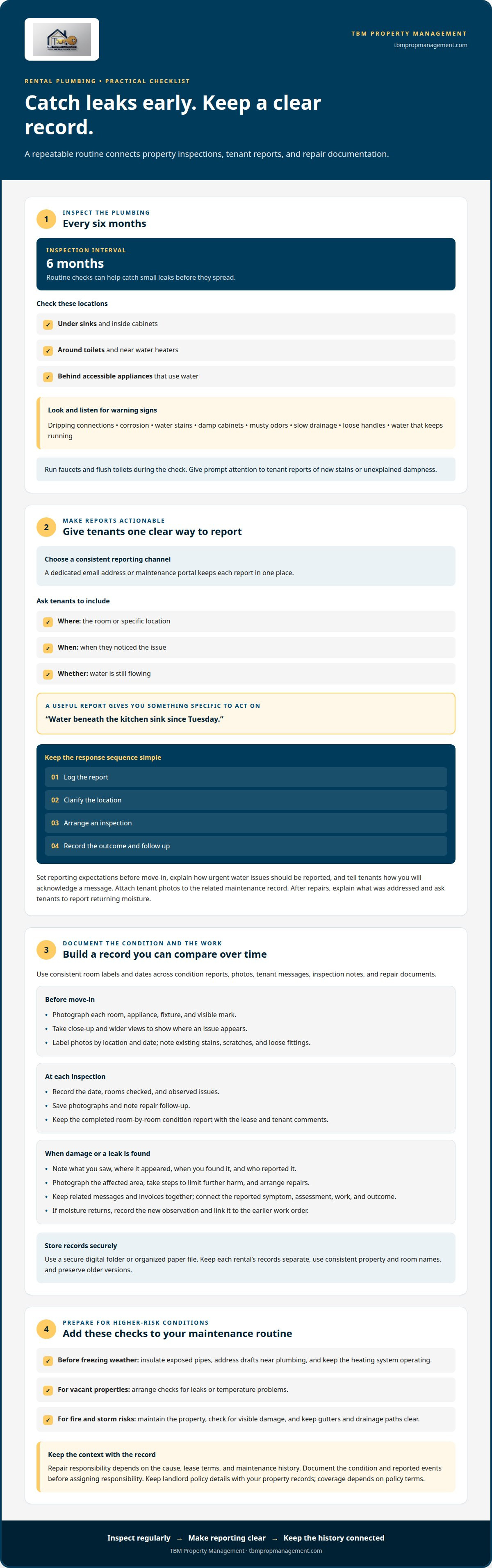
Inspect rental plumbing every six months to catch small leaks before they spread. Check beneath sinks, around toilets, near water heaters, and behind accessible appliances. Look for dripping connections, corrosion, water stains, damp cabinets, and musty odors. Run faucets and flush toilets, watching for slow drainage, loose handles, or water that keeps running. Give prompt attention to tenant reports of new stains or unexplained dampness.
Set inspection terms in the rental agreement. Explain which areas a routine inspection covers, how tenants can report plumbing concerns, and how you will record findings. Clarify that the inspection concerns the property, not tenants’ personal belongings. Follow applicable entry and notice requirements when arranging access. After each visit, record the date, rooms checked, observed issues, photographs, and repair follow-up. Written records help distinguish a new leak from one noted during an earlier visit.
Who pays for repairs depends on the cause, lease terms, and maintenance history. A worn pipe differs from damage caused by misuse, so document the condition and reported events before assigning responsibility. A security deposit may cover eligible property damage, subject to state rules. In Michigan, the Michigan Legislature says a landlord may require a security deposit, but it cannot exceed 1 1/2 months' rent. State limits vary, so don’t treat Michigan’s cap as a nationwide rule.
Landlord insurance costs depend on factors such as location, property characteristics, coverage limits, and deductible. Compare policy terms with the risks at your rental rather than relying on a single national figure. Landlord insurance can cover damage caused by fire, lightning, wind, or hail, depending on the policy. Keep the policy details with your property records.
Reduce fire and storm risks by maintaining the property, checking for visible damage, and keeping gutters and drainage paths clear. Before freezing weather, insulate exposed pipes, address drafts near plumbing, and keep the heating system operating. If the property will be vacant, arrange checks for leaks or temperature problems. These steps can help limit avoidable damage and create a clear maintenance record.
2. Tenant reporting and communication
Give tenants one clear way to report leaks, damp spots, and plumbing changes. A dedicated email address or maintenance portal keeps each report in one place. Ask tenants to include the room, when they noticed the issue, and whether water is still flowing. For example, “water beneath the kitchen sink since Tuesday” gives you more to act on than “something’s wrong.”
Set expectations before move-in. Explain how tenants should report urgent water issues, what details to provide, and how you will acknowledge a message. Include the steps in lease welcome materials and share them again when tenants receive the keys. If a tenant reports a ceiling stain, explain the next action and keep the original message. Clear updates reduce uncertainty while you assess the problem.
Use a simple response sequence: log the report, clarify the location, arrange an inspection, and record the outcome. Attach any tenant photos to the relevant maintenance record. After repairs, tell the tenant what was addressed and ask them to report any returning moisture. This timeline can reveal recurring problems, such as a drip that returns after a fixture is used.
Communication starts during tenant screening, too. Verify application details consistently and apply the same documented criteria to each applicant. One recommended benchmark is verifying that prospective tenants earn at least three times the monthly rent. Income alone does not show how someone will report a leak, so also ask about prior rental references and maintenance communication. Record decisions and supporting details consistently.
Tenant background checks can help you assess an application alongside rental history, references, and income information. Keep the process organized: use consistent criteria, document the information reviewed, and communicate next steps clearly. Strong reporting procedures and careful tenant screening support can help establish a more reliable process, from application review through maintenance communication.
3. Maintenance records and documentation
Accurate maintenance records support protecting your rental property from damage by showing what changed and when. Before move-in, photograph each room, appliance, fixture, and visible mark. Take both close-up and wider views to show where each issue appears. Label files by location and date, such as “bathroom vanity, move-in condition.” Note stains, scratches, loose fittings, and other existing concerns.
Use a room-by-room condition report to make comparisons clear. Record water staining on a kitchen cabinet separately from chipped bathroom tile. Save the completed report with the lease and any tenant comments. Keep original photos and dated versions of later reports so you can compare the property’s condition over time without relying on memory.
When you discover damage, document what you see, where it appears, and when you found it. Photograph the affected area and note who reported it. Then take steps to limit further harm, arrange repairs, and keep related messages and invoices together. For example, link a ceiling stain to the repair record for the pipe above it.
A useful maintenance entry connects the report, assessment, work, and outcome. Note the reported symptom, assessment date, completed work, and any follow-up. If a repair does not resolve a recurring leak, record the new observation and link it to the earlier work order. This timeline helps identify repeat issues and inform future maintenance decisions.
Store records in a secure digital folder or organized paper file. Use consistent property names and room labels across photos, inspection notes, tenant messages, and repair documents. Keep each rental’s records separate, and preserve older versions. This organized history helps protect your rental property from damage by making patterns easier to spot and targeted maintenance easier to plan. At move-in, compare the latest condition report with the previous one and document changes clearly.
4. What landlord insurance coverage protects against tenant-caused property damage?
Start with the policy’s covered causes of loss, not assumptions about tenant responsibility. Landlord insurance can cover rental property damage caused by fire, lightning, wind, or hail. That does not establish whether a tenant-related incident, such as an overflowing sink, qualifies. Read the policy wording to understand covered causes and exclusions.
Separate the cause of damage from who may be responsible. A tenant might report water beneath a sink, while an inspection identifies a failed pipe or overflowing fixture. Record the report, visible condition, and repair findings, then compare those facts with the policy language. Do not assume every tenant-related incident is covered or automatically excluded.
Review the policy’s limits, deductible, exclusions, and claim instructions before a problem occurs. Note which property the policy covers, how to report a loss, and what documentation the insurer requests. Keep the policy and renewal documents with the property’s maintenance records. After damage, preserve photos, invoices, tenant messages, and inspection notes to create a clear account of events.
Ask focused questions as you review coverage: Does the policy name the relevant cause of loss? Does an exclusion apply to the circumstances? What records support a claim? A dated tenant message and repair invoice, for example, can help establish when a leak was reported and what work followed. Keep the answers with the policy so you can find them quickly during a stressful incident.
Insurance is one part of managing risk; routine oversight and prompt maintenance also matter. If coordinating property inspections and repairs is becoming difficult, explore support for rental property oversight. Clear records and a careful policy review help you respond with better information when tenant-caused damage raises coverage questions.
TBM Property Management: Full-Service Property Management
TBM Property Management provides full-service property management for owners who want help coordinating rental oversight. If tenant communication, leasing tasks, and rent collection compete for your attention, a management partner can bring those responsibilities together.
Support can begin with tenant placement and leasing, then continue with rent collection and ongoing management. This can help when you are preparing a property for a new tenancy or want a more organized approach to day-to-day ownership. Clear records and consistent communication remain essential to protecting your investment.
Consider full-service management if handling every responsibility yourself is difficult to sustain. Visit tbmpropmanagement.com to learn more about working with TBM Property Management.
Make your next property decision with confidence
Protecting your rental property from damage is an ongoing part of ownership, not a one-time task. Decide which responsibilities need a clearer routine and which are taking too much time to manage alone. Consistent processes can make property oversight more organized and help you respond purposefully when concerns arise.
TBM Property Management offers Full-Service Property Management, Tenant Placement, and Leasing Services. These options can help owners manage rental responsibilities or prepare a property for tenancy. Choose the support that fits your property and goals, then take the next step at a pace that works for you.
Ready to discuss your rental management needs? Contact TBM Property Management today. A thoughtful plan can help you move forward with greater confidence and focus.
Frequently Asked Questions
Why is Water Damage a Big Deal?
Water damage can affect building materials, finishes, and personal belongings. Hidden moisture may spread before anyone notices. For example, a slow leak beneath a dishwasher can damage nearby flooring and cabinetry. Damp areas can also create conditions for mold growth. Early attention helps limit how far a problem spreads and clarifies what repairs may be needed.
What are the best ways to prevent damage to a rental property?
Combine routine property checks with practical upkeep and clear tenant instructions. Keep drainage paths clear, maintain plumbing fixtures, and make shutoff valves easy to identify if a leak occurs. Extend downspouts at least five feet from the foundation to help reduce nearby water pooling. Ask tenants to report new stains, unusual odors, or appliance leaks promptly, then document your response.
How can landlords protect rental properties from water damage, leaks, and mold?
Address moisture sources promptly and check places where water can remain hidden, such as beneath refrigerators, around washing machines, and inside bathroom cabinets. Look for condensation on windows or persistent dampness near exterior walls. After plumbing repairs, check the surrounding area for returning moisture. In bathrooms, use ventilation during and after bathing, and respond promptly to signs of a leak.
What should a rental property move-in and move-out inspection checklist include?
Include each room, major appliance, plumbing fixture, floor, wall, ceiling, window, and door in the condition report. Note whether items work and describe visible wear, such as a loose faucet handle or marked countertop. At move-out, use the same categories and compare findings with the move-in record. Dated photos of the same locations make changes easier to review and discuss.
What lease clauses can help prevent or address tenant-caused damage?
Clear lease terms can explain how tenants should report maintenance concerns, how access for inspections or repairs is arranged, and how to care for fixtures and appliances. Specify the information a report should include, such as the affected room and visible symptoms. Explain how reported damage will be documented and assessed. Keep the terms consistent with applicable law and the signed agreement.