
Reducing Vacancy Rates in Rental Properties Through Pricing and Renewals
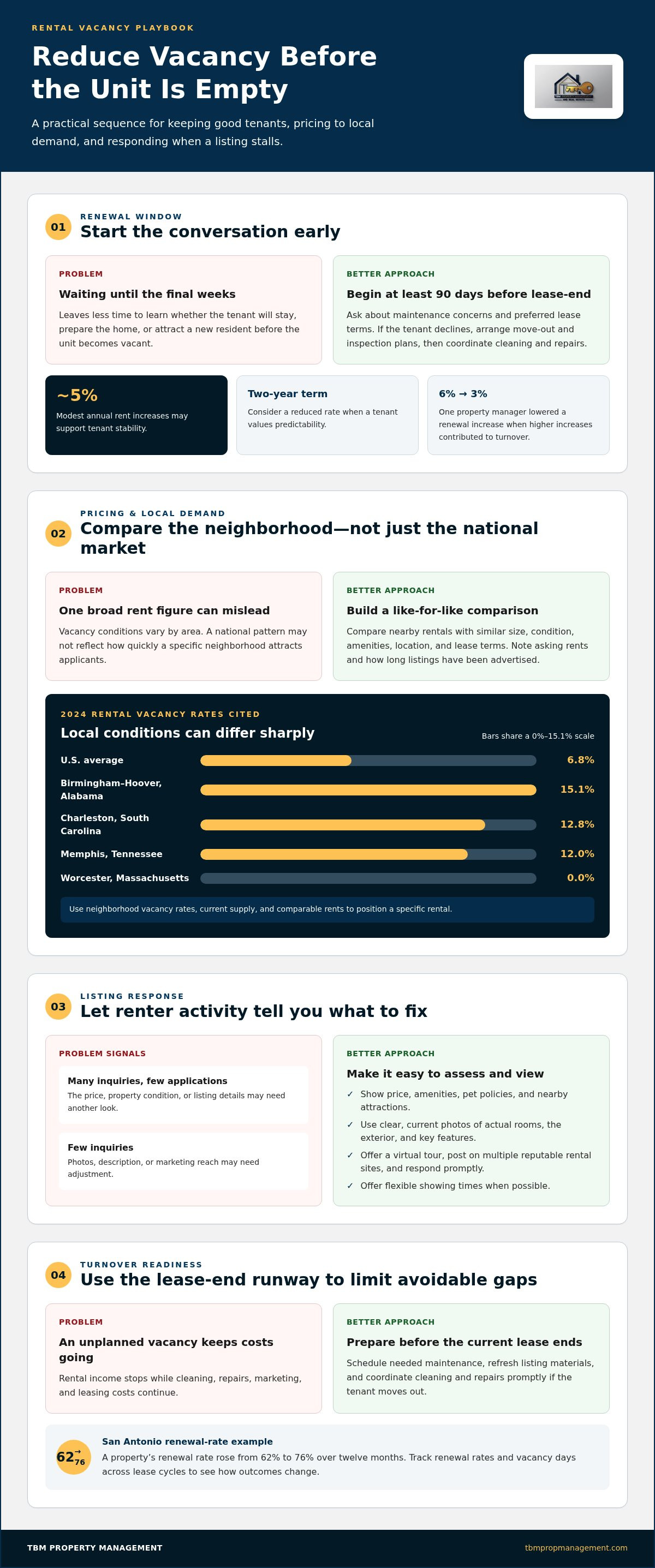
Reducing vacancy rates in rental properties starts before a tenant moves out: begin renewal discussions at least 90 days before the lease ends, and price the next lease competitively. Landlords can also consider modest annual rent increases of around 5% to support tenant stability.
A vacant rental means lost income while cleaning, repairs, marketing, and leasing costs continue. It’s understandable to focus on filling the unit quickly, but retaining a good tenant can help avoid the disruption and expense of repeated turnover.
This article explains how to approach renewals, compare rent with local competition, prepare a unit for its next resident, and manage costs during a vacancy. It also covers how vacancy periods can affect rental income and property value, helping you make steadier decisions for your investment.
Key Takeaways
- Start renewal conversations early and weigh tenant retention against the disruption of turnover.
- Compare local rental listings and adjust pricing when a property attracts attention but few applications.
- Use clear photos, virtual tours, and prompt responses to help qualified renters assess a property.
- Plan cleaning and repairs between tenants, and keep vacant units monitored to limit avoidable costs.
- Track vacancy periods and rental income to see how leasing gaps may affect your property’s performance and appeal.
1. Lease renewal incentives and early discussions
Start renewal discussions at least 90 days before the lease ends. That gives you time to learn whether a tenant plans to stay, discuss terms, and arrange a backup plan. Waiting until the final weeks can leave too little time to prepare the home or attract a new resident before the unit becomes vacant.
Use the conversation to understand what matters to the tenant. Ask about maintenance concerns, their preferred lease term, and whether a proposed rent change affects their decision. If they value predictability, consider offering a reduced rate for a two-year rental. A longer commitment can support continuity, but it should fit your financial plans and the property’s local rental market.
For tenants who want to renew, compare a proposed increase with current conditions and the cost of turnover. Modest annual rent increases of around 5% can help maintain tenant stability. If a larger increase is driving residents away, consider whether a smaller adjustment makes better financial sense. One property manager’s example reduced a renewal increase from 6% to 3% when higher increases contributed to turnover.
Incentives can also make renewal terms more attractive. Treat any incentive as a decision to weigh against vacancy, leasing, and preparation expenses, not as an automatic discount. Resident retention is often less expensive than repeated turnover.
Put every agreed change in a written renewal document. Clearly record the new rent, lease length, start date, and any incentive, then provide the tenant with the completed agreement. Keep advertising and screening practices consistent with the Fair Housing Act, which places limitations on rental advertising. Apply clear, nondiscriminatory screening standards consistently if you need a new applicant.
Prepare for a possible gap while the current lease is still active. Discuss renewal options, schedule needed maintenance, and refresh listing materials as the end date approaches. If the tenant declines, set a move-out and inspection plan, then coordinate cleaning and repairs so marketing can begin promptly. Track renewal rates and vacancy days after each lease cycle. Those figures can show whether timing, rent adjustments, or incentives are helping keep units occupied. A San Antonio property’s renewal rate rose from 62% to 76% over twelve months, illustrating how renewal outcomes can change when owners act deliberately.
2. How Can Rental Property Owners Reduce Vacancy Rates?
Start with local demand, not a rent figure copied from another city. Compare nearby rentals with similar size, condition, amenities, and lease terms. Tour competing properties when possible, then note which features appear consistently and where your home stands out. Check current listings and neighborhood vacancy rates before deciding how to position your rental. Conditions can shift between neighborhoods, so broad national trends won’t tell you how quickly a specific unit may attract applicants.
Make the listing easy to understand and assess. Include the rental price, available amenities, pet policies, and nearby attractions. Use clear, professional photos that show the actual rooms, exterior, and important features. A virtual tour gives prospective tenants another way to assess the layout before arranging a showing. Keep images current, especially after repairs or updates, so the listing reflects the home renters will visit.
Choose marketing channels that match how local renters search. Post the listing on multiple reputable rental sites and respond promptly to inquiries. Offer flexible showing times when possible, since a renter’s ability to view the home can affect whether they apply. If inquiries are plentiful but applications are scarce, review the price, condition, and listing details. If few people inquire, consider whether the photos, description, or marketing reach need adjustment.
Local vacancy figures show why a proactive approach matters. The average U.S. rental vacancy rate was 6.8% in 2024, while the Birmingham-Hoover, Alabama, metropolitan area reported 15.1%. Charleston, South Carolina, reported 12.8%, and Memphis, Tennessee, reported 12.0% that year. Worcester, Massachusetts, recorded 0.0% in 2024. These differences make neighborhood-level research more useful than assuming one national pattern applies everywhere.
Rental demand also responds to nearby supply and local economic conditions. New housing can give renters more options, while employment and income trends shape their ability to afford rent. Before investing, review vacancy rates, current rental supply, and comparable rents in the neighborhood. Once the property is listed, monitor inquiries and applications. If it remains vacant for an extended period, compare it again with similar local listings and adjust the price or presentation where needed.
Strong screening helps turn interest into a suitable tenancy. Apply clear standards consistently, and keep the application process organized as inquiries arrive. If coordinating repairs, inspections, and applicant screening takes time away from your other responsibilities, property maintenance coordination can support a more orderly leasing process.
3. Setting competitive rental prices
A competitive rent balances monthly income against the risk of an empty unit. Compare similar local listings before setting or adjusting a price. Match the property’s size, condition, location, amenities, and lease terms as closely as possible. A renovated home with parking may justify a different asking rent than a similar unit needing repairs. Price the property renters can actually view, not an idealized version of it. A practical starting point for reducing vacancy rates in rental properties is making that comparison specific to the home.
Use several nearby listings rather than relying on a single comparison. Note each asking rent, how long the property has been advertised, and whether it offers features yours lacks. Tour comparable rentals when practical, since listing photos may not reveal differences in condition or layout. Then choose a starting price that reflects those details. Asking rents show the competition, while inquiry and application activity reveal how renters respond to your specific offer.
Price can affect leasing speed. Lower-priced rentals may lease more quickly than higher-priced ones, but the lowest figure isn’t automatically the best choice. A rent well below comparable homes may reduce income without solving underlying issues such as poor presentation or needed repairs. Consider price alongside condition, marketing, and the current rental vacancy rate in the neighborhood.
A San Antonio property offers an example of measured pricing. The practical lesson is to assess local demand and the property’s performance before making an increase. A sharp jump may improve potential income on paper, yet make a renewal or new lease less attractive than nearby alternatives.
For renewals, compare the proposed rent with current local listings and the value of keeping the home occupied. A modest increase can support income while limiting the risk of losing a resident who values stability. Consider the lease timing, the home’s condition, and whether the tenant has raised maintenance concerns. If a tenant declines, compare the expected rent from a new lease with the time and costs of preparing and marketing the unit.
Review pricing when the response doesn’t match expectations. Many inquiries but few applications may point to concerns about condition, terms, or value that become clear when prospects see the home. Very few inquiries can suggest the asking rent or listing presentation misses the market. Adjust one factor at a time, then observe whether responses improve. For owners reducing vacancy rates in rental properties, tracking asking rent, vacancy days, and completed applications helps guide changes based on results rather than guesswork.
4. Managing costs during vacancies
A vacant unit can reduce cash flow while operating costs continue. Turnover also brings cleaning, repairs, advertising, showings, leasing delays, and lost rent. For property owners, controlling the time and work between renters can help contain these expenses without neglecting the home.
Lowering rent or offering a move-in incentive can attract applicants sooner, but it reduces income from the lease. A first-month discount or reduced security deposit may help a listing stand out, but an incentive won’t solve problems such as poor condition or unclear marketing. Compare its cost with the expected vacancy period and the rent the property could earn without it.
Use a written turnover plan to coordinate each task. Confirm the move-out date, inspect the unit, identify repairs, and schedule cleaning before advertising or showings. Prioritize issues that could worsen if left unattended, such as leaks or pest activity. Check vacant properties regularly for leaks, pests, or structural damage, and address problems promptly. A brief inspection record helps landlords track what needs attention and avoid delays between tasks.
Property management software can keep rent collection, maintenance requests, and lease agreements in one tracking system. During a vacancy, use records to see which repairs remain open, which leasing steps are pending, and whether rent collection resumes after move-in. Clear tracking also helps prevent a missed maintenance task from extending the gap between renters.
For larger, multi-unit rental properties, on-site property management can help fill vacancies more quickly. Its practical value lies in coordinating property access, responding to prospective renters, and keeping leasing and maintenance tasks moving. Smaller portfolios may benefit instead from a consistent schedule for inspections, repairs, and listing preparation. Choose practices that match the number of units and the work needed to keep housing ready for occupancy.
Turnover savings can add up when a resident stays. That figure illustrates the combined effect of several expenses, not a guaranteed saving for every rental. Compare actual invoices, vacancy days, and leasing activity across your own units to identify where delays are costing the most.
A simple cost review after each vacancy can guide your next decision. Record cleaning, repair, advertising, and lost-rent expenses separately, then note how long each step took. If maintenance coordination caused delays, adjust scheduling; if few prospects responded, review the listing and price. This gives landlords a practical way to improve property management without cutting essential upkeep.
5. Lost rental income and reduced property values
A vacancy affects more than the rent missing this month. Each empty day can interrupt rental income while property expenses continue, putting pressure on investment cash flow. Gaps between rentals can also reduce property prices and discourage potential buyers and investors. Track the income impact alongside vacancy days to see the full cost, rather than treating an empty unit as only a leasing delay.
Calculate a property’s vacancy rate by dividing vacant units by total rental units, then multiplying by 100. For one unit, track the days it sits vacant against the full measurement period. Keep the period consistent when comparing properties or reviewing performance over time. This calculation shows how often units are empty, while the rent calculation shows the income those vacant days have displaced.
To estimate rental vacancy loss, divide monthly rent by 30 to calculate daily prorated rent, then multiply that amount by vacant days. For example, a unit vacant for several days loses the daily rent amount for each unoccupied day. Record lost rent separately from cleaning, repairs, and leasing expenses. That separation makes it easier to identify whether income gaps or turnover work are weighing more heavily on the property.
Property value can also be affected when rental income is interrupted. Buyers and investors may consider whether a home has a reliable rental history and whether vacancies signal weak demand or deferred maintenance. A vacancy alone doesn’t determine a property’s value, but repeated gaps can make its income record less compelling. Keep lease dates, rent collected, vacancy periods, and completed repairs organized to show how the investment is being managed.
Reducing a rental’s vacancy period from six weeks to two weeks can increase annual rental revenue. To work toward a shorter gap, begin preparing before move-out: arrange an inspection, identify repairs, and plan cleaning and listing updates. Once availability is clear, coordinate showings and respond to inquiries. These steps keep leasing tasks moving instead of allowing avoidable delays to extend lost income.
Review results after each vacancy. Compare the days vacant, rent lost, turnover expenses, and time spent on repairs. If maintenance repeatedly delays a new lease, adjust scheduling; if the unit remains empty despite being ready, reassess its listing and market position. A consistent record helps landlords recognize patterns across rental cycles and choose practical changes. That way, owners can focus on what they control and better protect rental income and the long-term investment.
TBM Property Management: Full-Service Property Management
TBM Property Management provides Full-Service Property Management for owners who want support coordinating rental operations. If renewal schedules, leasing tasks, and rent collection compete for your attention, professional management can bring those responsibilities together.
For a vacancy, TBM’s Tenant Placement and Leasing Services support preparing a rental for a new resident and managing the leasing steps. Rent Collection helps keep rent administration organized once a tenant moves in. These services can be especially useful when you own rental property but have limited time to manage each transition, follow up on payments, or keep lease details in order.
To discuss property management support for your rental, contact TBM Property Management.
Make your next leasing cycle more manageable
Make vacancy planning a repeatable part of owning a rental. Set a routine for reviewing lease timelines, property readiness, and tenant communication, then use each leasing cycle to refine the process. Consistent oversight can help you make decisions earlier and keep tasks from piling up at the end of a lease.
If coordinating these responsibilities is taking time away from your investment goals, TBM Property Management offers Full-Service Property Management, Tenant Placement, and Leasing Services. These services support owners who want help managing leasing responsibilities and preparing for transitions between tenants. Contact TBM Property Management to discuss the support that fits your approach to reducing vacancy rates in rental properties.
Contact TBM Property Management to discuss your rental property. With a clear plan and the right support, you can approach the next leasing cycle with greater confidence.
Frequently Asked Questions
How Can Rental Property Owners Reduce Vacancy Rates?
Owners can reduce vacancies by managing the full leasing cycle, from lease planning to move-in. Set reminders for upcoming expirations, prepare a backup marketing plan, and track inquiries through applications and signed leases. If an apartment receives repeated questions about the same feature, clarify that detail in the listing. Reviewing these patterns after each vacancy helps identify where prospects lose interest and improve the next leasing cycle.
What are the most effective ways to reduce rental property vacancy rates?
The most useful approach combines retention, readiness, and prompt follow-through. Keep communication open after move-in, respond to maintenance requests, and apply screening standards consistently. Before advertising, walk through the unit as a prospective renter would and note anything that could make the home feel neglected. After listing, record inquiries, showings, and applications separately. This funnel helps reveal whether the issue is visibility, property appeal, or the application process.
How should landlords price rentals to reduce vacancy without sacrificing income?
Set rent by comparing similar nearby homes, then assess the listing’s response before making another change. If prospects view the property but don’t apply, examine value, condition, and lease terms together. If few people inquire, the asking rent or listing reach may be limiting interest. Owners can also compare the income from a slightly lower rent with the rent lost during a longer vacancy, using their own leasing history.
How do property condition, repairs, and upgrades affect rental vacancy rates?
Condition shapes a renter’s first impression and confidence in the home. Exterior appearance, cleanliness, lighting, odors, paint, flooring, and kitchen or bathroom condition can all influence how a unit feels during a showing. Prioritize repairs affecting safety, function, or visible upkeep before cosmetic upgrades. For example, fixing a leaking tap and brightening a dark entry may matter more to a prospective tenant than adding a decorative feature.
Which marketing channels and listing practices attract tenants fastest?
Use reputable rental sites that reach renters likely to consider your neighborhood, and make the listing complete from the start. Clearly state rent, amenities, pet policies, and nearby attractions, then offer flexible showing times. Respond promptly so interested prospects can arrange a viewing while the home is still available. Track which channels produce completed applications, not just clicks, and focus future effort on the strongest sources.
How can landlords improve tenant retention and reduce turnover?
Retention starts with a clear, dependable resident experience. Explain how tenants can submit maintenance requests, acknowledge them promptly, and communicate what happens next. Screening matters too: use clear, nondiscriminatory criteria and apply them consistently so expectations are fair from the beginning. At renewal time, invite residents to raise concerns before making decisions. A specific maintenance fix or clearer communication can address a controllable reason for moving.
What are typical vacancy rates and average days to rent by U.S. market?
Vacancy differs by market: the U.S. rental vacancy rate was 6.8% in 2024, while Birmingham-Hoover, Alabama, reported 15.1%, and New York, New York, reported 4.7%. Days to rent also depend on local competition, price, and property condition. One owner’s example recorded 70 average vacancy days at a property charging $1,300, compared with 40 days in its submarket at $1,200.
How do seasonal trends affect rental demand and vacancy rates?
Seasonal demand can change the number of active renters and the timing of their moves, but local patterns matter. Compare your own inquiry and showing records across leasing periods instead of assuming every market follows the same calendar. If interest tends to slow during a particular period, prepare listing materials and maintenance earlier, then keep showing access practical. Employment changes, local supply, and neighborhood preferences can also influence demand.