Renting Out a Second Home in Maryland: Rules and Taxes
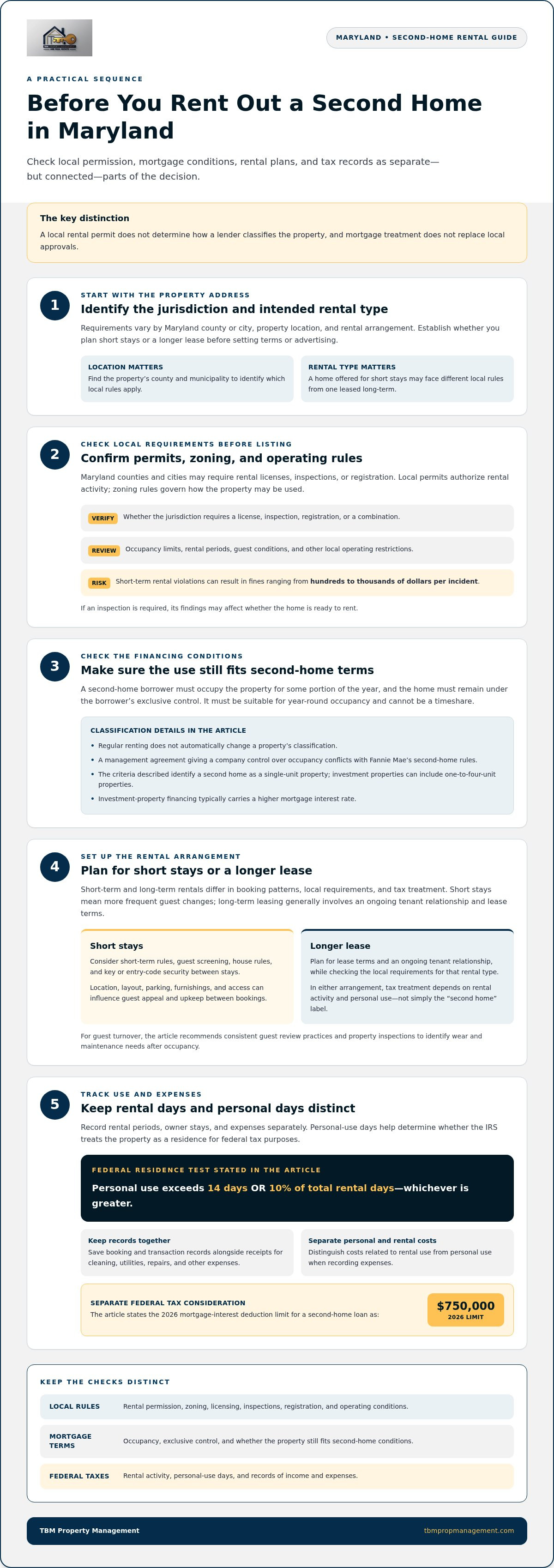
Yes, renting out a second home in Maryland can be possible, but the arrangement needs to fit the property’s mortgage classification and the local rules that apply. Renting it doesn’t automatically disqualify it from second-home tax classification. According to the Internal Revenue Service, a property qualifies as a residence for federal tax purposes when personal use exceeds 14 days or 10% of total rental days, whichever is greater.
It’s understandable to want rental income without creating problems with your home’s status or missing a local requirement. The key is to treat occupancy, permits, short-term rental rules, and taxes as related but separate considerations.
This article explains how those factors affect renting out a second home in Maryland, including how short-term use differs from a longer lease and what to know about tax classification. You’ll have a clearer framework for weighing rental plans against your personal use of the property.
Key Takeaways
- Separate your mortgage occupancy terms from local rental requirements; each can affect whether and how you rent the property.
- Before offering short stays, consider whether the arrangement fits your second-home occupancy rules and the property’s location and features.
- Track rental days and personal use, since both can affect how the property is treated for federal tax purposes.
- If managing tenants, leasing, and rent collection feels like a burden, full-service property management can help simplify ongoing oversight.
Permits and regulations to check before renting
Yes. Maryland counties and cities may require rental licenses, inspections, or registration. Requirements depend on the property’s location and rental type, so identify the applicable rules before advertising or accepting tenants.
Local Permits and Zoning
Local permits authorize rental activity, while zoning rules govern how properties may be used. For a second home, the address and intended rental arrangement can determine which requirements apply. A home offered for short stays, for example, may face different local rules from one leased to a long-term tenant. Identify the property’s jurisdiction and intended use before setting rental terms or publishing an advertisement.
Occupancy Rules and Rental Regulations
Occupancy rules set conditions for who may stay at a property and how it may be rented. Local rental regulations may also cover registration, inspections, and operating conditions. These details matter when setting guest limits, lease terms, or rental periods. Short-term rental violations can result in fines ranging from hundreds to thousands of dollars per incident, so account for local restrictions in your rental plan.
Maryland Rental Requirements
Maryland rental requirements involve local rules as well as separate federal tax and mortgage considerations. A local permit does not determine how a lender classifies the property, and mortgage treatment does not replace local approvals. According to the Internal Revenue Service, the 2026 deduction limit for mortgage interest on a second-home loan is $750,000. Keep that federal tax consideration distinct from local rental permission.
Rental Licenses, Inspections, and Registration
Rental licensing, inspections, and registration are local processes that can apply to residential rentals. A Maryland county or city may require one or more of them, depending on the jurisdiction and rental type. Before listing, identify the property’s county and municipality, then determine which process applies. If an inspection is required, its findings may affect whether the property is ready to rent.
Can You Use a Second Home as a Short-Term Rental?
Yes, you can rent out a second home short-term if its mortgage terms and local rules allow it. Short stays also call for practical decisions about demand, guest screening, property security, and tax treatment.
Location and Property Features
Location and home features shape the guests a short-term rental is likely to attract. In Maryland, proximity to a waterfront, historic district, or major employment center may influence a guest’s choice. The property’s layout, parking, furnishings, and access also affect how comfortably visitors can use it. Consider which features suit likely guests, then weigh their appeal against the upkeep required between stays.
Guest turnover calls for clear screening and security practices. Set house rules before booking, use a consistent guest review process, and secure keys or entry codes between stays. Property inspections can help identify wear and maintenance needs after occupancy, keeping the home ready for the next guest.
When a Second Home Becomes an Investment Property
A second home may be treated as an investment property when its use and financing no longer meet second-home conditions. A borrower must occupy a second home for some portion of the year, and the property must remain under the borrower’s exclusive control. It must also be suitable for year-round occupancy and cannot be a timeshare.
Regularly renting the home doesn’t automatically change its classification. However, a management agreement that gives a company control over occupancy conflicts with Fannie Mae’s second-home rules. Investment properties can include one-to-four-unit properties, while a second home must be a single-unit property under the criteria described in the research. Classification matters because investment-property financing typically carries a higher mortgage interest rate.
Short-Term and Long-Term Rental Rules and Taxes
Short-term and long-term rentals differ in booking patterns, local requirements, and tax treatment. Short stays involve frequent guest changes, making local short-term rental rules and guest management important. Long-term leasing generally involves an ongoing tenant relationship and lease terms. In either case, federal tax treatment depends on rental activity and personal use, not simply the label “second home.”
Keep records of rental periods and owner stays. The distinction can affect both tax classification and whether the financing still fits second-home occupancy conditions. If short-stay turnovers and property oversight become difficult to coordinate, property inspections and maintenance coordination can help you monitor the home between guests.
Second-home rental income and tax classification
Rental income, personal stays, and operating expenses all affect a second home’s federal tax treatment. Keep records of rental and personal use separately, whether you lease directly or use Airbnb.
Personal Use and Rental Deductions
Personal-use days help determine whether the IRS treats a property as a residence for tax purposes. According to the Internal Revenue Service, a property qualifies as a residence for U.S. tax purposes when personal use exceeds 14 days or 10% of total rental days, whichever is greater.
That classification can affect how you report rental income and expenses. Record each rental period, owner stay, and expense, then separate costs related to rental use from personal use. If Airbnb handles bookings, keep its transaction records alongside receipts for cleaning, utilities, and repairs. Accurate records make it easier to distinguish rental activity from personal enjoyment.
The 14-Day Rental Rule
The 14-day rule applies when a second home is rented for 14 days or fewer during the year. Under this rule, rental income from the property is tax-free. This is distinct from the residence test, which weighs personal-use days against rental days.
For example, a short rental period may fall within the 14-day rule, while more rental days require attention to income reporting and expense records. Track dates carefully, including stays arranged through Airbnb. Don’t assume that a platform’s booking summary alone captures owner use or other rental expenses.
Insurance should match the property’s actual rental use. Short-term rental insurance premiums are estimated at 15% to 25% above standard homeowners insurance, so account for coverage when reviewing potential income.
Operating costs also affect the net return. Short-term rental operating costs can account for 60% to 70% of revenue. Include these recurring expenses in your records before comparing rental income with the costs of maintaining the home.
What are Maryland's rules for renting out a second home?
Renting out a Maryland second home involves separate mortgage, tax, insurance, and local regulatory considerations. These requirements operate independently, so meeting one does not settle the others. The property’s location and rental arrangement determine which local rules apply.
Start with the property’s county and municipality, then decide whether you plan to offer short stays or a longer lease. That distinction helps focus your review of zoning, rental approvals, and occupancy conditions. Maryland’s local requirements vary, so a rule that applies in one city may not apply in another.
Next, compare the planned rental use with your mortgage classification. A property financed as a second home has occupancy conditions that differ from those for an investment property. Regular rental activity alone does not settle the classification question. Your intended personal use, lender terms, and any agreement governing occupancy all matter.
Federal tax treatment is another separate consideration. Keep records distinguishing rental periods, personal stays, and property expenses. Calendar entries and booking records, for example, can help show when the home served as your residence versus a rental. Those details matter when assessing how rental income and expenses should be treated.
Insurance should also reflect how the Maryland property is used. A policy for an owner-occupied second home may not address every risk associated with paying guests or tenants. Consider the actual rental arrangement, guest access, and property use when reviewing coverage. Don’t assume mortgage approval or local permission automatically settles insurance coverage.
A practical review starts with four separate questions: Does the planned use fit the mortgage terms? How will rental activity affect federal taxes? Does the property’s location impose local requirements? Does the insurance match the rental arrangement? Keeping these answers distinct can prevent one approval from being mistaken for blanket permission to rent.
For help coordinating the property’s ongoing oversight, explore rental property management support.
Choose insurance that reflects the rental arrangement, including paying guests or tenants, and review coverage in light of guest access and property use.
TBM Property Management: Full-Service Property Management
TBM Property Management provides Full-Service Property Management for owners who want help overseeing a rental home. If coordinating tenant needs, lease details, and rent collection is taking time away from other priorities, its services can help manage those responsibilities. Tenant Placement & Leasing Only supports finding tenants and preparing lease arrangements, while Rent Collection helps manage incoming payments.
This support can be useful when you live far from your Maryland property or prefer not to handle each rental task yourself. Full-service management brings these listed responsibilities together, so you can focus on decisions about the property rather than coordinating every part of the rental process. To discuss management for your rental, contact TBM Property Management or visit tbmpropmanagement.com.
Make Your Rental Plan Fit the Way You Want to Own
Before turning plans into bookings, decide what role you want the home to play in your life. Would you rather preserve flexible personal use or establish a more consistent rental routine? That choice can guide the type of rental arrangement you pursue and how involved you want to be in day-to-day decisions.
For renting out a second home in Maryland, a clear ownership plan is more than paperwork. It gives you a practical way to balance rental goals with the reasons you bought the property. Consider how much oversight you want to handle yourself and where steady support could make ownership easier.
If you’re ready to discuss support for your rental property, contact TBM Property Management today. A thoughtful next step can help you move forward with greater clarity and confidence.
Frequently Asked Questions
Can You Rent Out a Second Home?
Yes, you can rent out a second home if the arrangement fits its financing terms and applicable local rules. Before accepting a booking, decide whether you’ll offer a short stay or a longer lease, since that affects how you manage the rental. Keep your plans for personal use in view, especially if your mortgage relies on second-home occupancy conditions.
Can a Property Manager Handle Your Second Home?
Yes, a property manager can handle practical rental responsibilities for a second home. TBM Property Management offers tenant placement, leasing services, rent collection, tenant screening, property inspections, and maintenance coordination. An owner who lives far from the property, for example, may value help coordinating tenant communications and routine oversight. The owner remains responsible for decisions about the home’s rental strategy and personal use.
Does Renting a Second Home Affect Your Mortgage Rate?
It can, if the lender classifies the property as an investment property rather than a second home. Investment-property mortgages typically have higher interest rates than second-home mortgages. Renting alone doesn’t automatically change the classification, but occupancy, lender terms, and who controls access can matter. Review your loan documents before changing how the property is used or managed.
Should I self-manage my rental or hire a property management company?
Choose self-management if you have time to coordinate leasing, tenant screening, rent collection, and maintenance requests. Consider a property manager if these duties are difficult to manage alongside work, travel, or distance from the home. An owner living outside Maryland, for instance, may prefer help coordinating local property inspections. Compare the effort each approach requires with the level of oversight you want.
What Else Should You Check Before Renting Out a Second Home?
Review your lender’s occupancy terms, the local requirements for the property’s address, and insurance coverage for the planned rental use. Then organize records for bookings, owner stays, income, and expenses. If you plan to furnish the home, consider how you’ll secure keys, manage guest access, and track the property’s condition between tenants or short-term stays.
What Taxes Apply to Rental Income from a Maryland Second Home?
Federal tax treatment depends on rental activity and personal use. Rental income from a second home rented for 14 days or fewer during the year is tax-free under the rule described here. According to the Internal Revenue Service, a property qualifies as a residence for U.S. tax purposes when personal use exceeds 14 days or 10% of total rental days, whichever is greater. Keep booking and personal-use records.